
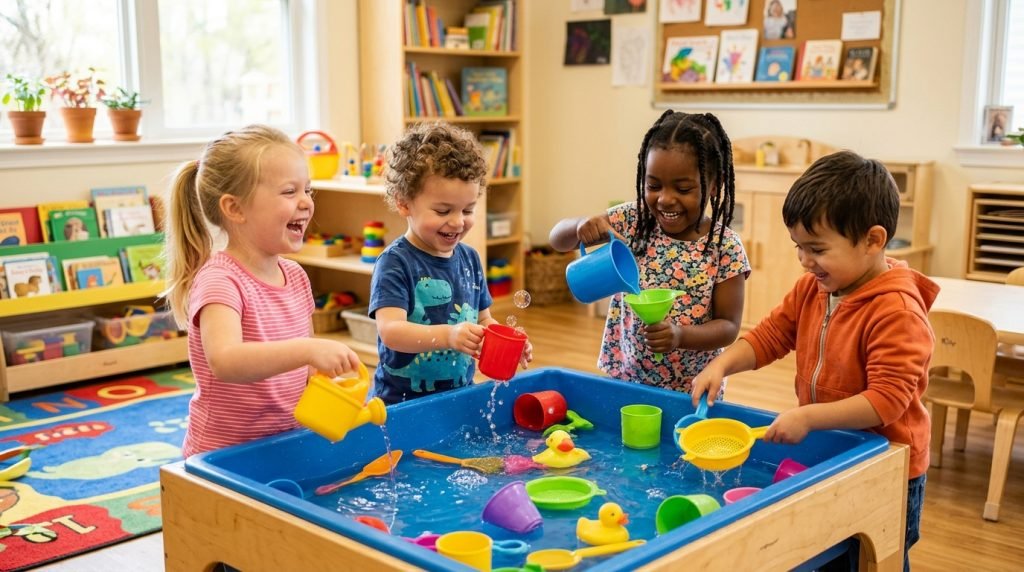
Fun Water Activities for Curious Kids
Introduction:
Water is one of the most exciting ways for children to explore the world around them. From pouring and splashing to floating and sinking, simple water activities encourage curiosity while teaching valuable science concepts. At Adventure Montessori, we believe children learn best through hands-on experiences that allow them to discover, ask questions, and have fun.
Water play is much more than entertainment. It helps children build confidence, improve coordination, strengthen problem-solving skills, and understand basic scientific ideas through play.
Why Is Water Play Important?
Children naturally enjoy playing with water because it is calming, exciting, and full of surprises. Every splash creates an opportunity to learn something new.
Water activities help children:
- Improve fine motor skills.
- Develop hand-eye coordination.
- Learn cause and effect.
- Build concentration.
- Encourage creativity.
- Strengthen language skills through conversation.
- Explore basic science concepts.
Easy Water Activities to Try:
You don’t need expensive materials to create meaningful learning experiences.
Here are a few simple ideas:
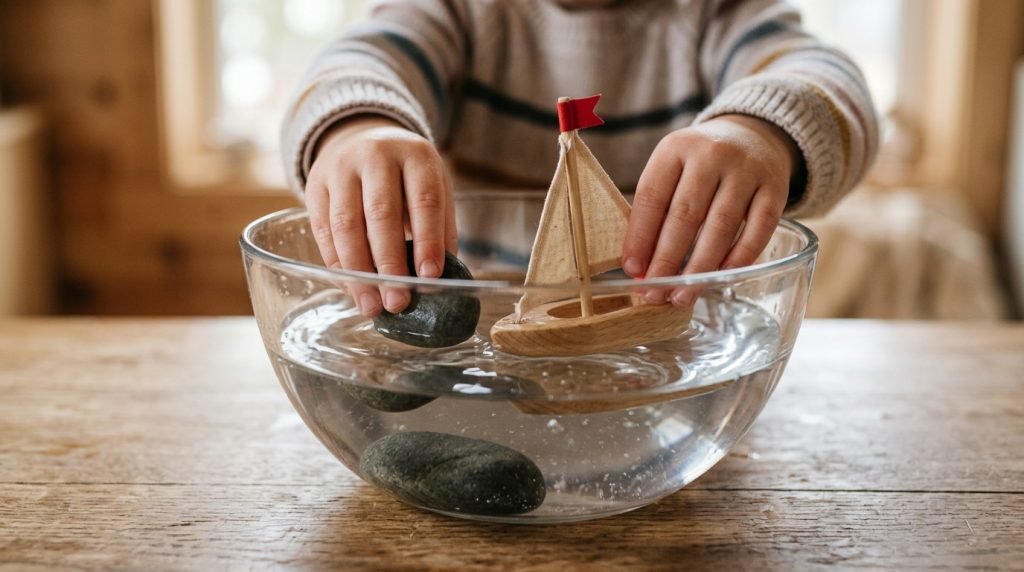
Floating and Sinking:
Fill a container with water and collect different household objects. Ask your child to guess whether each object will float or sink before placing it in the water.
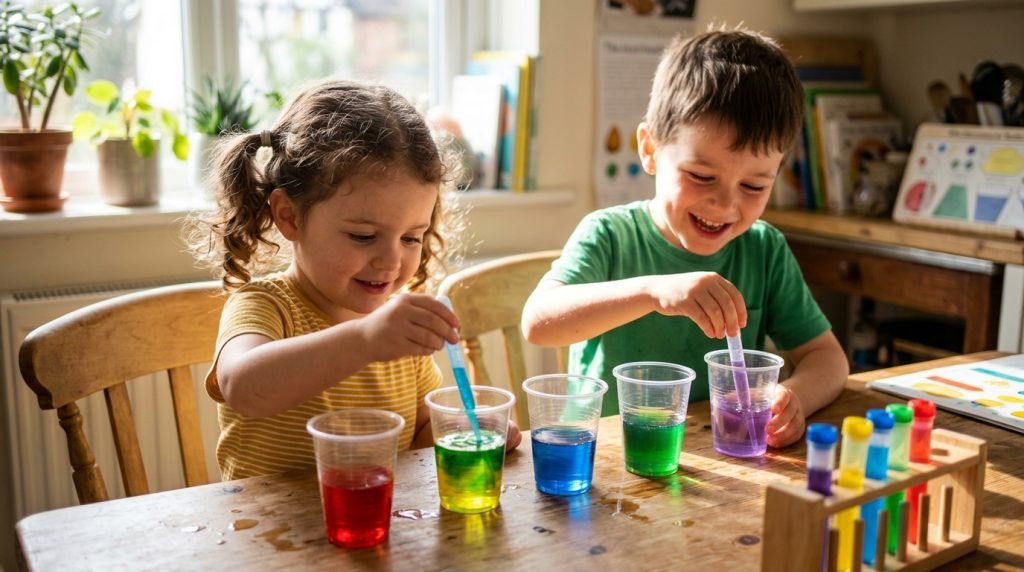
Color Mixing Fun:
Add a few drops of food coloring to different cups of water and let children mix colors to discover how new colors are created.
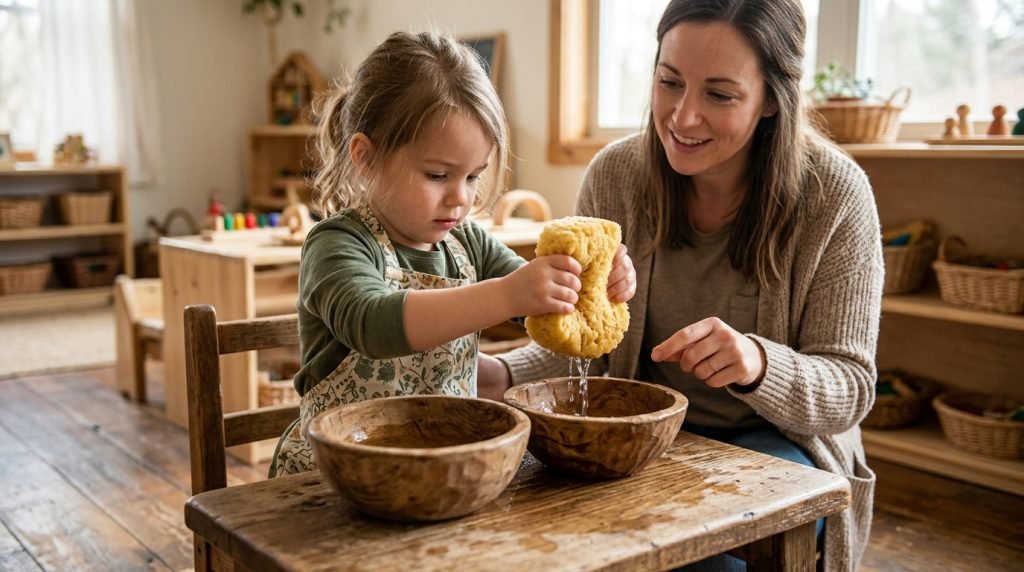
Sponge Challenge:
Give children a sponge and two bowls. Let them transfer water using only the sponge. This strengthens hand muscles while making learning fun.
Safety Comes First:
Water play should always be supervised by an adult.
Remember these safety tips:
- Never leave children unattended near water.
- Use shallow containers for younger children.
- Clean up spills immediately to prevent slipping.
- Use child-friendly materials.
- Encourage gentle and respectful play.
Learning Beyond the Activity:
While playing, ask open-ended questions such as:
- Which object is heavier?
- Why do you think this one floated?
- What happened when the colors mixed?
- Which container holds more water?
- How can we move the water without spilling it?
These conversations encourage critical thinking and build vocabulary.
FAQ:
1. At what age can children start water play?
Children can enjoy simple water activities from toddler age with close adult supervision.
2. What skills does water play develop?
Water play improves fine motor skills, coordination, creativity, concentration, and early science understanding.
3. Is water play safe indoors?
Yes, when using shallow containers, non-slip surfaces, and constant adult supervision.
4. What household items can be used for water activities?
Cups, spoons, measuring jugs, plastic toys, sponges, and small containers work perfectly.
5. How long should a water play session last?
Around 20–30 minutes is usually enough to keep children engaged and excited.