
Raising Happy, Confident & Independent Children
Montessori child care is more than keeping children safe it is about helping them grow into confident, curious, independent, and kind individuals. Our practical child care tips, Montessori activities, and everyday routines help parents create a nurturing environment where children can learn and thrive.
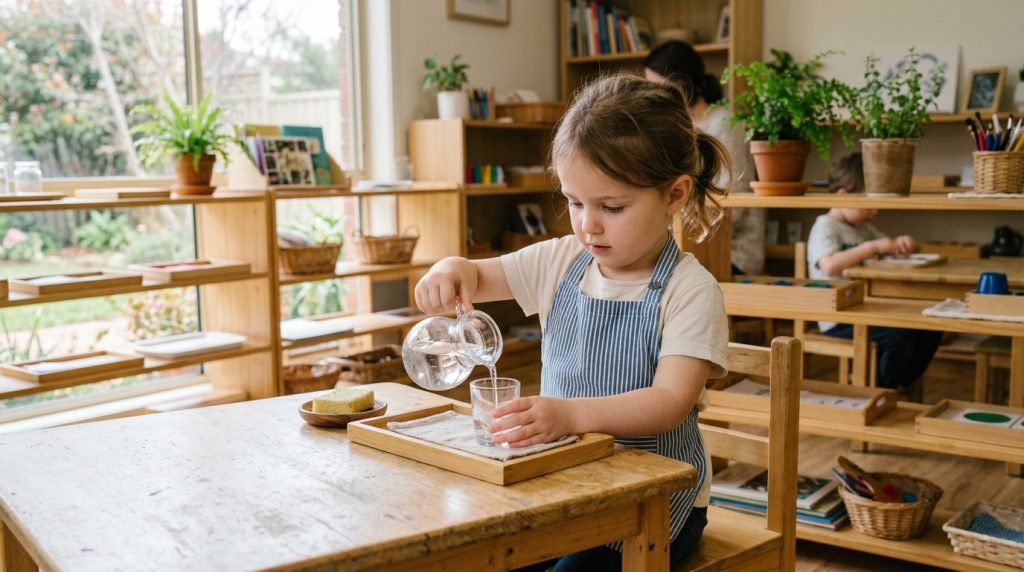
Build Independence Through Everyday Tasks
Children enjoy feeling capable. Simple activities like putting on shoes, washing hands, watering plants, packing a small bag, or setting the table teach responsibility and confidence. Instead of doing everything for them, guide them patiently and let them practice at their own pace.
Benefits
- Builds self-confidence
- Improves fine motor skills
- Encourages responsibility
- Develops problem-solving skills
Create a Calm Learning Environment
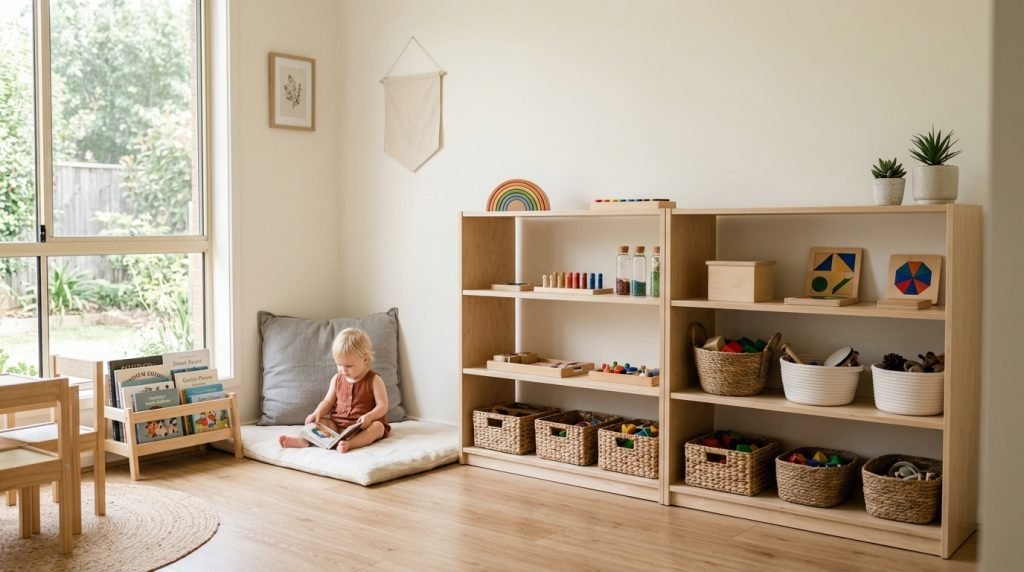
Children focus better in organised spaces. Keep toys on low shelves, rotate activities regularly, and avoid overcrowding the room. A calm environment encourages concentration and independent exploration.
Easy Ideas
- Organise toys by category
- Use baskets and trays
- Rotate toys every week
- Choose quality over quantity
Encourage Learning Through Play
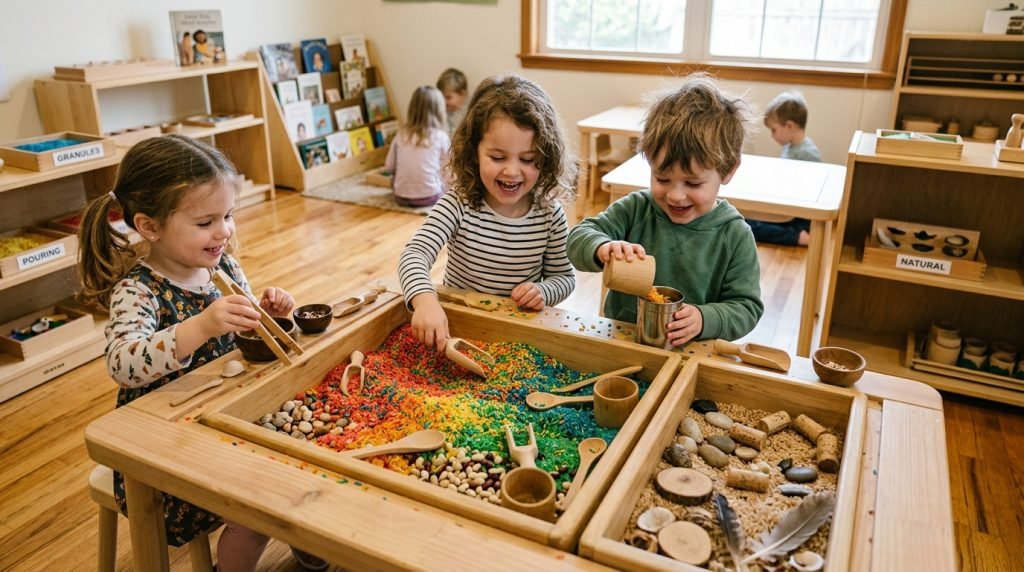
Play is how children understand the world. Sensory bins, puzzles, pretend play, building blocks, matching games, and outdoor exploration all support language, creativity, and problem-solving without feeling like formal lessons.
Try These Activities
- Sensory bins
- Wooden puzzles
- Nature walks
- Storytelling
- Building blocks
- Water play
Support Emotional Growth
Helping children recognise and express emotions builds emotional intelligence. Listen patiently, name their feelings, and teach simple calming techniques like deep breathing or quiet reading when they feel overwhelmed.
Parents Can
- Validate feelings
- Stay calm during tantrums
- Encourage communication
- Model kindness and respect

Frequently asked questions
The specific, sometimes awkward questions parents actually ask us.
What are the basic needs of young children?
Young children need proper nutrition, sleep, safety, affection, play, learning opportunities, and consistent care.
How can I create a healthy routine for my child?
A simple routine can include regular times for meals, play, learning, outdoor activities, relaxation, and sleep.
How much sleep do toddlers need?
Toddlers generally need a consistent amount of sleep each day, including nighttime sleep and, depending on age, a daytime nap.
How can I encourage healthy habits in children?
Parents can encourage healthy habits by establishing consistent routines, offering nutritious foods, encouraging physical activity, and teaching good hygiene.
How can parents support a child's development?
Parents can support development through play, reading, conversations, practical activities, exploration, and age-appropriate learning experiences.
Get one honest email a week.
Montessori ideas, real adventures, and answers to the questions you were too tired to Google.
No spam, ever. Unsubscribe any time.