
Short answer: toddler meal planning gets much easier once you know how little a toddler actually needs. The standard guidance is one tablespoon of each food per year of age, so a two year old gets about two tablespoons of pasta, two of vegetables and two of chicken. A toddler’s serving is roughly a quarter of an adult’s. Most toddlers do well on three meals and two to three snacks, spaced every two and a half to three hours. Plan components rather than recipes, serve the family meal in toddler portions, and let your child decide how much of it to eat.
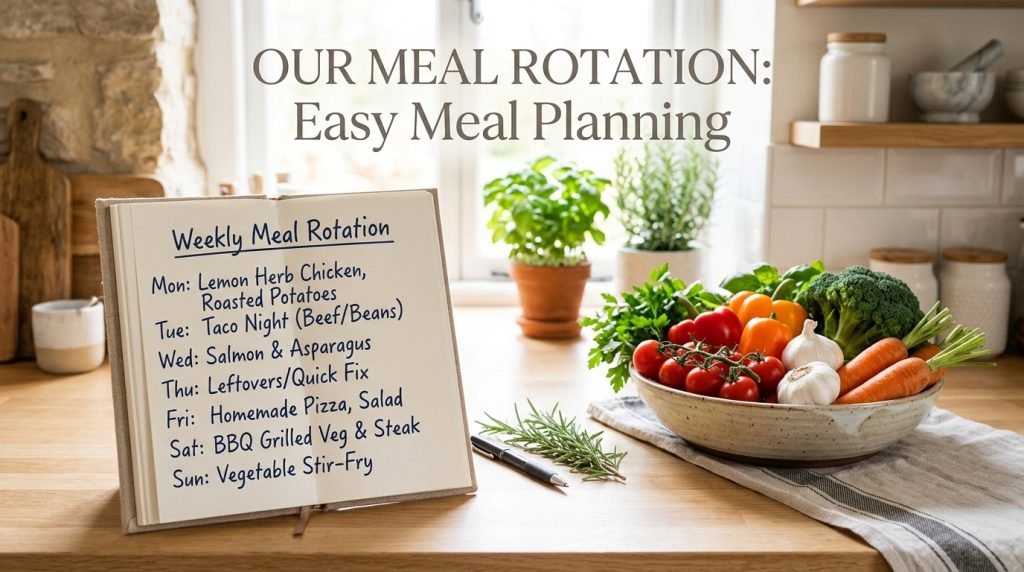
Almost every guide to toddler meal planning answers the question what shall I cook. That is rarely the thing keeping parents up. The real questions are how much to put on the plate, whose fault it is when none of it gets eaten, and whether any of this is a problem. This covers those first, and the sample week second.
Toddler Meal Planning
How Much a Toddler Actually Needs
This is the part that changes how the week looks, so it comes first.
- One tablespoon of each food, per year of age. A two year old gets two tablespoons of each thing on the plate. A three year old gets three. That is a starting portion, not a target, and you top it up if they ask.
- A toddler’s serving is about a quarter of an adult’s. If you would not eat a quarter of your own dinner and call it a meal, remember they are a quarter of your size.
- Roughly 1,000 to 1,400 calories a day, across everything, for most toddlers.
- Three meals and two to three snacks, spaced every two and a half to three hours. That spacing matters more than it sounds, because a child who grazed at 11am will not eat lunch at 12.
Two tablespoons of pasta looks like almost nothing on a dinner plate. That is the point. Serving a toddler-sized portion and offering more, rather than serving an adult-sized portion and watching most of it come back, changes the emotional temperature of the whole meal. It also cuts your food waste substantially, which is one of the things the old version of this page promised and never explained how to do.
Whose Job Is What
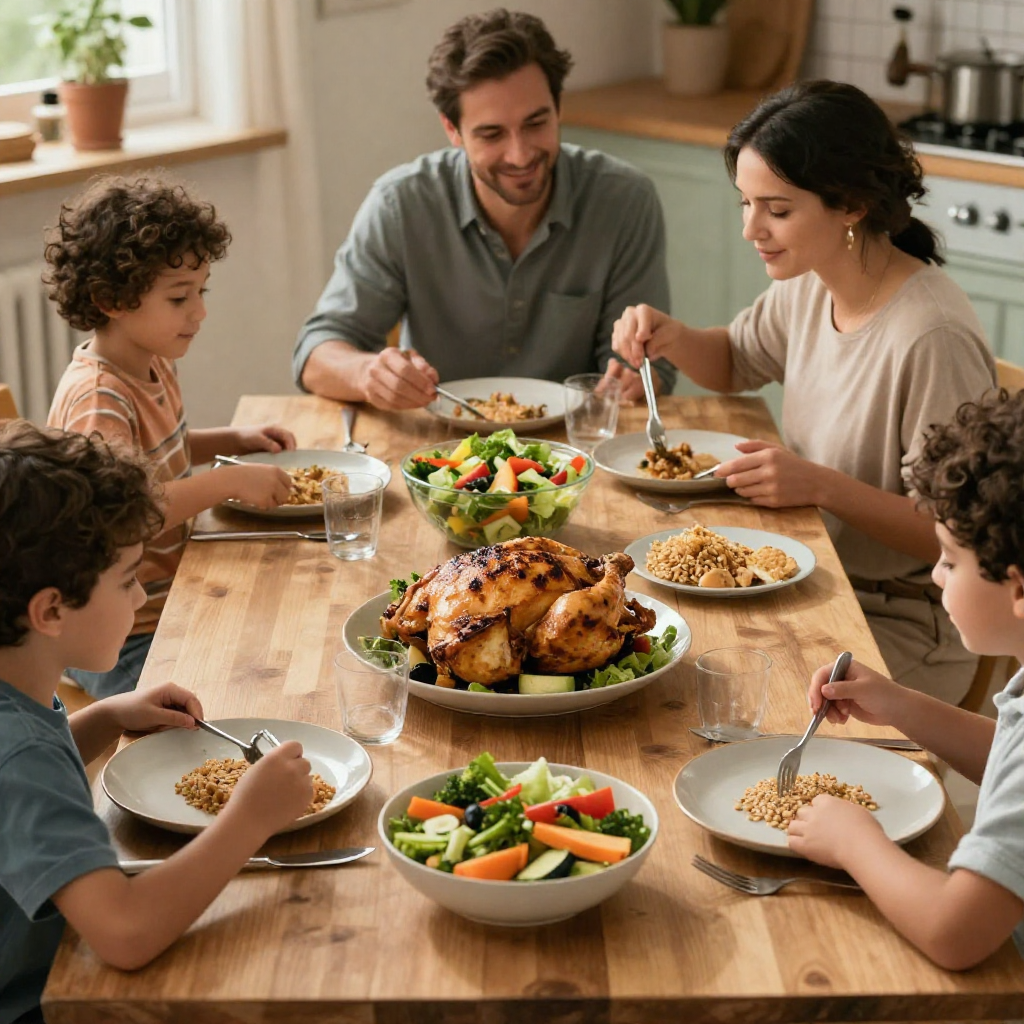
The most useful idea in child feeding is a division of labour, usually called the Division of Responsibility, developed by the dietitian Ellyn Satter and used very widely in paediatric practice.
- You decide WHAT is served, WHEN it is served, and WHERE.
- Your child decides WHETHER they eat, and HOW MUCH.
That is the whole thing. It sounds almost too simple, and it resolves most mealtime conflict, because nearly all of it comes from one side crossing into the other’s job. Coaxing three more bites is you doing their job. Demanding a different dinner is them doing yours.
What it means for planning:
- You are not planning meals your child will eat. You are planning meals you are willing to serve. Whether they eat them is genuinely not your department.
- Serve one meal, not two. A separate toddler dinner is the beginning of a very long road.
- Always include one thing you know they will accept, even if it is only the bread. This is not caving. It is making sure the meal is not a test they can fail.
- Meals and snacks happen at times you set. The Satter approach is explicit that food and drink outside those times undercuts the whole structure, because a child who can graze has no reason to come to the table.
Plan Components, Not Recipes
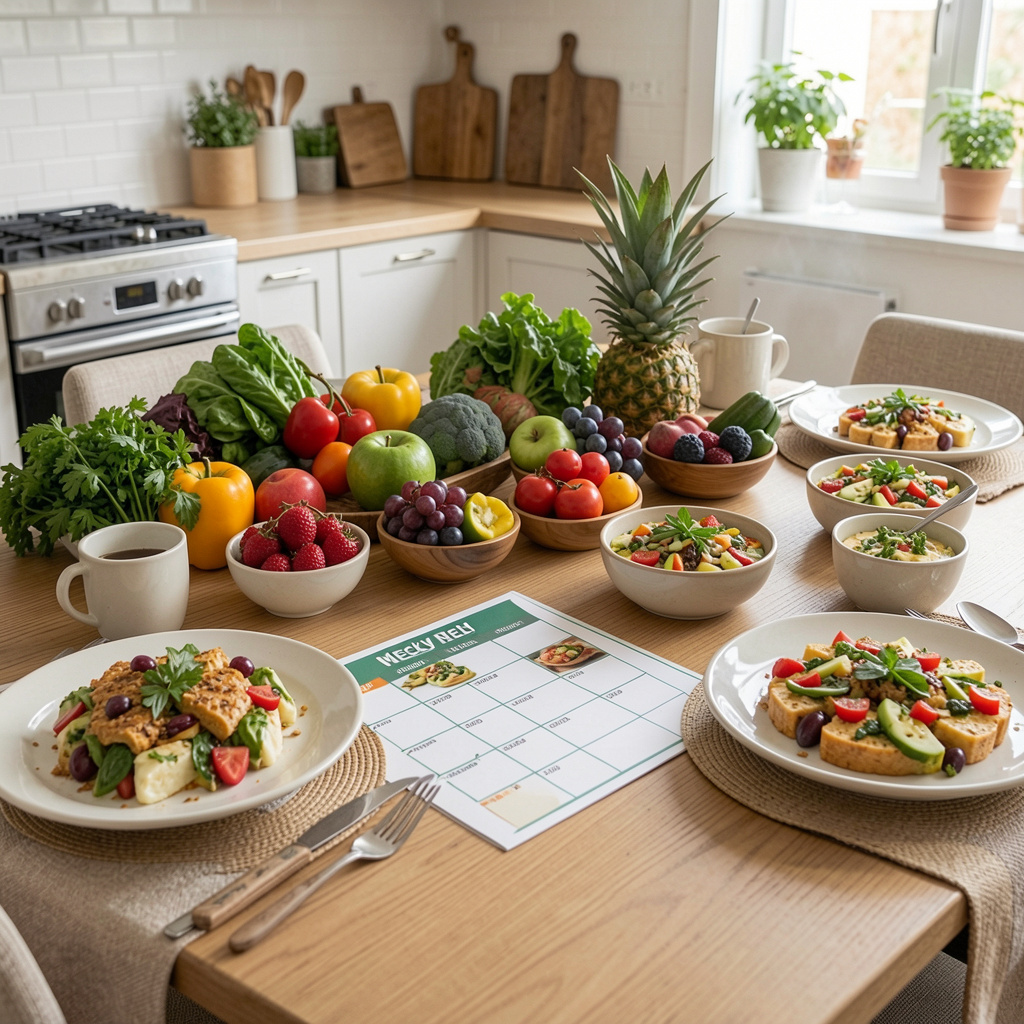
This is the method, and it is why toddler meal planning is not the same job as family meal planning.
Instead of planning seven dinners, plan a short list of components and assemble them. A component is a carbohydrate, a protein, a vegetable or fruit, and a fat. Cook three or four of each across the week and recombine them.
- Carbohydrates: pasta, rice, potatoes, bread, couscous, oats.
- Proteins: chicken, lentils, eggs, beans, fish, yoghurt, cheese.
- Vegetables and fruit: whatever is cheap this week, cooked soft.
- Fats: olive oil, butter, avocado, full-fat yoghurt. Toddlers need proportionally more fat than adults, so this is not the place to economise.
Roast a tray of chicken and vegetables on Sunday and it is Monday’s rice bowl, Tuesday’s pasta and Wednesday’s soup. You are not cooking three meals, you are assembling one thing three ways.
Repeat far more than feels acceptable. Toddlers like repetition, most people over-plan variety, and the same lunch four days running is completely fine. Variety across a week matters. Variety across a day does not.
A Sample Week, With Toddler Portions
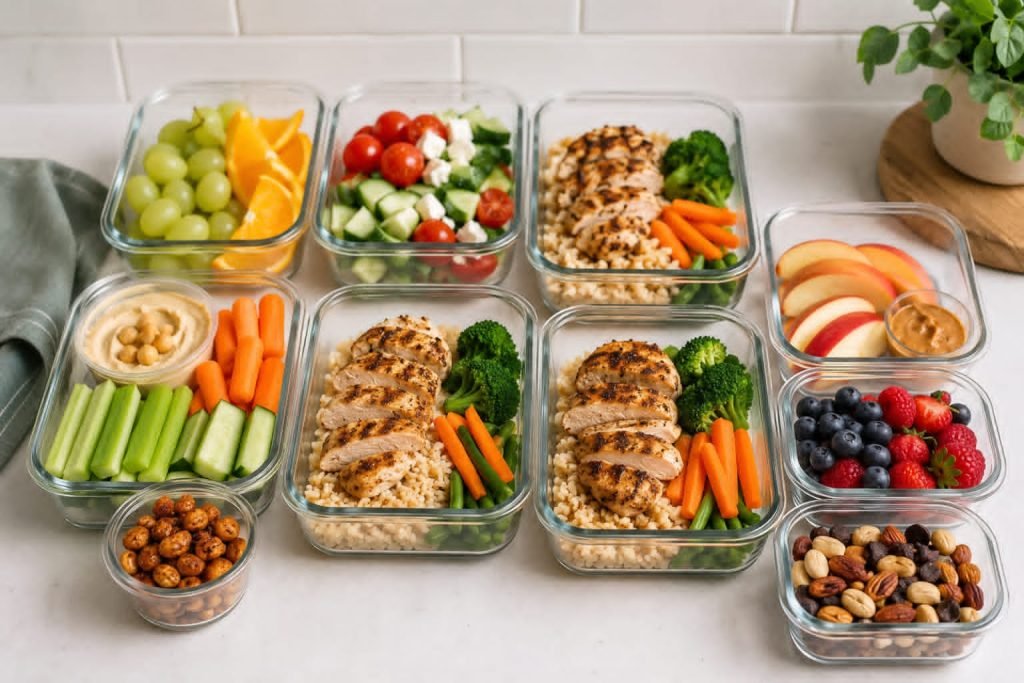
Portions shown are for a two year old, so about two tablespoons of each component. Scale up by one tablespoon per year.
- Monday. Pasta with tomato sauce, grated cheese, soft-cooked broccoli. Two tablespoons of each.
- Tuesday. Rice, roast chicken from Sunday, roasted carrot, a spoon of yoghurt.
- Wednesday. Lentil soup, thin-cut buttered toast fingers, banana.
- Thursday. Scrambled egg, toast, soft peas, quartered grapes.
- Friday. Baked potato, beans, grated cheese, cucumber cut into strips.
- Saturday. Fish, mashed potato, soft green beans.
- Sunday. Roast chicken and vegetables, cooked soft, and the leftovers start the cycle again.
Breakfasts, rotated with no ceremony: porridge with fruit, yoghurt with soft fruit, eggs and toast, wholegrain cereal with milk.
Snacks, two or three a day: fruit cut appropriately, yoghurt, cheese cut into strips rather than cubes, toast fingers, soft cooked vegetable sticks.
Notice this is the same food the adults are eating, cut smaller and served in far smaller amounts. That is the whole trick, and it is why component planning beats a separate toddler menu.
New Foods, and How Many Times to Offer Them
Everyone tells you to keep offering. Almost nobody gives you a number, so here is one with real evidence behind it.
A USDA systematic review found moderate evidence that offering a single vegetable or fruit once a day for 8 to 10 or more days is likely to increase acceptance of that food in children aged 4 to 24 months. Individual children vary a great deal, and some studies saw changes after as few as one, three, five or six exposures.
The more interesting finding is what the effect carries over to. Acceptance gained through repeated exposure tends to generalise to other foods in the same category but not to a different category. Getting your child to accept courgette may help with other vegetables. It will not help with fruit, and it will not help with fish.
So the practical version:
- Pick one new food and offer it daily for a week and a half, rather than a different new thing every night.
- Offer it alongside things they already accept, in a toddler-sized amount.
- No pressure, no comment, no reward for tasting. Put it on the plate and talk about something else.
- Work through one category at a time. A run at vegetables, then a run at proteins, rather than scattering.
The Milk Problem
This is genuinely under-discussed and it undermines more meal plans than picky eating does.
Milk is filling and it is easy to drink a lot of it. The AAP’s beverage guidance puts total daily milk at up to about 16 ounces, or two cups, for ages 2 to 3, and up to about 20 ounces for ages 4 to 5. Whole milk is generally recommended until age 2.
The reason the cap matters is iron. High intake of cow’s milk is a recognised risk factor for iron deficiency anaemia in young children. Children aged 1 to 3 need about 7 mg of iron a day, and a child who fills up on milk both displaces iron-rich food and absorbs iron less well.
- If your carefully planned dinner is being refused nightly, count the milk first. It is the most common single explanation and it is easy to test.
- Offer water between meals rather than milk, and keep milk with meals.
- Plan iron in deliberately: red meat, lentils, beans, eggs, fortified cereal. Pairing them with something containing vitamin C helps absorption.
Cutting Food Safely
Meal planning for this age is partly a knife-work question, and it applies to every meal in the week above.
- Cut everything to no larger than half an inch. That is the American Academy of Pediatrics guidance for young children.
- Quarter grapes lengthwise. Halved is not enough.
- Cook hard vegetables soft, especially carrot. Raw carrot sticks are on the AAP’s avoid-or-modify list for under-fours.
- Cheese in thin strips, not cubes. Chunks of cheese and string cheese are both on that list.
- Spread nut butter thinly. Thick chunks are a hazard.
- No whole nuts, popcorn, or hard sweets before four.
- Sit down to eat, always, and stay in the room.
When They Eat Nothing
- Look at the week, not the meal. Toddler appetite swings enormously day to day. A child who eats almost nothing on Tuesday often eats a startling amount on Wednesday.
- Check the timing. A snack ninety minutes before dinner is usually the answer.
- Check the milk. See above.
- End the meal without commentary. No lecture, no substitute, no bargaining. The next eating occasion is in two and a half hours and that is close enough.
- Growth is the measure, not plates. If your child is growing along their own line and has energy, intake is almost certainly fine. If they are not, that is a conversation for your health visitor or paediatrician rather than a meal-planning problem.
- Get help if it goes beyond fussiness. Losing weight, gagging or choking often, fewer than about twenty accepted foods, or real distress at the table are worth raising with a professional rather than solving with a better meal plan.
Frequently Asked Questions
How much should a toddler eat at each meal?
A useful starting portion is one tablespoon of each food per year of age, so about two tablespoons of each item for a two year old. A toddler’s serving is roughly a quarter of an adult’s. Offer that, then offer more if they want it, rather than serving a large plate.
What should a 2 year old eat in a day?
Three meals and two to three snacks, roughly every two and a half to three hours, totalling about 1,000 to 1,400 calories. Aim for a carbohydrate, a protein, a fruit or vegetable and a source of fat across the day rather than at every single meal.
How do I meal plan for a picky toddler?
Plan components rather than recipes, always include one thing you know they accept, and serve the same meal as the family in a smaller portion. Then let them decide how much to eat. You choose what, when and where. They choose whether and how much.
How many times should I offer a new food?
A USDA evidence review found moderate evidence that offering a single fruit or vegetable once a day for 8 to 10 or more days increases acceptance. Some children need far fewer. Offer it without pressure alongside foods they already like, and work through one food category at a time, since the effect carries across similar foods rather than to completely different ones.
How much milk should a toddler drink?
Up to about 16 ounces a day for ages 2 to 3, and up to about 20 ounces for ages 4 to 5, according to AAP beverage guidance. More than that fills them up and is a recognised risk factor for iron deficiency. Offer water between meals instead.
Should I cook a separate meal for my toddler?
No, and it is worth avoiding from the start. Serve the family meal in toddler portions, cut safely, with one component you know they will accept. Cooking two dinners is a habit that becomes very hard to stop.