
Short answer: the two things that most reliably predict whether a child reads well later are phonological awareness, meaning hearing the separate sounds inside spoken words, and letter knowledge. Almost every toddler reading activity list online is heavy on letters and nearly silent on sounds, which is the wrong way round. The single highest-value habit is not an activity at all: it is how you read aloud. Asking questions and building on the answers, rather than just reading the words, has measurable effects on language. And no, you cannot teach a two year old to actually read, and there is a trial that shows it.
Most toddler reading activities guides are a list of twenty-five fun things with no particular logic to them. Some are good. But almost none of them tell you what each activity is actually for, and none mention what the research says about which skills matter most.
So this one is organised by skill, with the evidence attached, and it starts with the read-aloud technique that has more support behind it than any craft on any of those lists.
Toddler Reading Activities
What Actually Predicts Reading, According to the Research
The National Early Literacy Panel reviewed the research on what predicts later reading and identified six variables with medium to large predictive power, holding up even after controlling for intelligence and family income:
- Alphabet knowledge, meaning knowing letter names and sounds
- Phonological awareness, meaning hearing and manipulating the sounds inside spoken words, separately from letters
- Rapid naming of letters and digits
- Rapid naming of objects and colours
- Writing, or writing their own name
- Phonological memory, meaning holding sounds in mind briefly
Here is the part I did not expect, and it is worth stating plainly because it cuts against what most parenting advice implies. Oral language sits in the second tier of that ranking, not the first. Vocabulary and general talk correlate with later literacy, but in the Panel’s analysis they did not hold predictive power once the other variables were controlled for.
That needs a caveat rather than an overcorrection. The Panel’s outcome measures leaned toward decoding and spelling, and the Panel itself noted that more complex measures of oral language predicted better than simple vocabulary counts. Talking to your child is not wasted. But if you are choosing where to put your limited energy, sound work and letters are the higher-yield end, and they are exactly what the popular activity lists skimp on.
Can You Teach a Two Year Old to Read?
No, and this is one of the rare parenting questions with a clean experimental answer.
In 2014, researchers ran a randomised trial with 117 infants aged 9 to 18 months. Half were given a commercial baby-reading media package, with DVDs, flashcards and word books, used daily for seven months. The other half carried on as normal.
The result: no differences between the groups on 13 of the 14 measures of emergent and early reading. There was one difference. Parents in the treatment group believed their child was learning to read words.
That last detail is the useful one. These products work on the parent, not the child.
On the wider question of starting early: research comparing children who began formal reading instruction at five with those who began at seven found the later starters had caught up by around age eleven. Starting earlier does not appear to produce a lasting advantage. What the toddler years are genuinely for is the sound and letter groundwork below, which is a different thing from reading.
How to Read Aloud: the PEER Loop
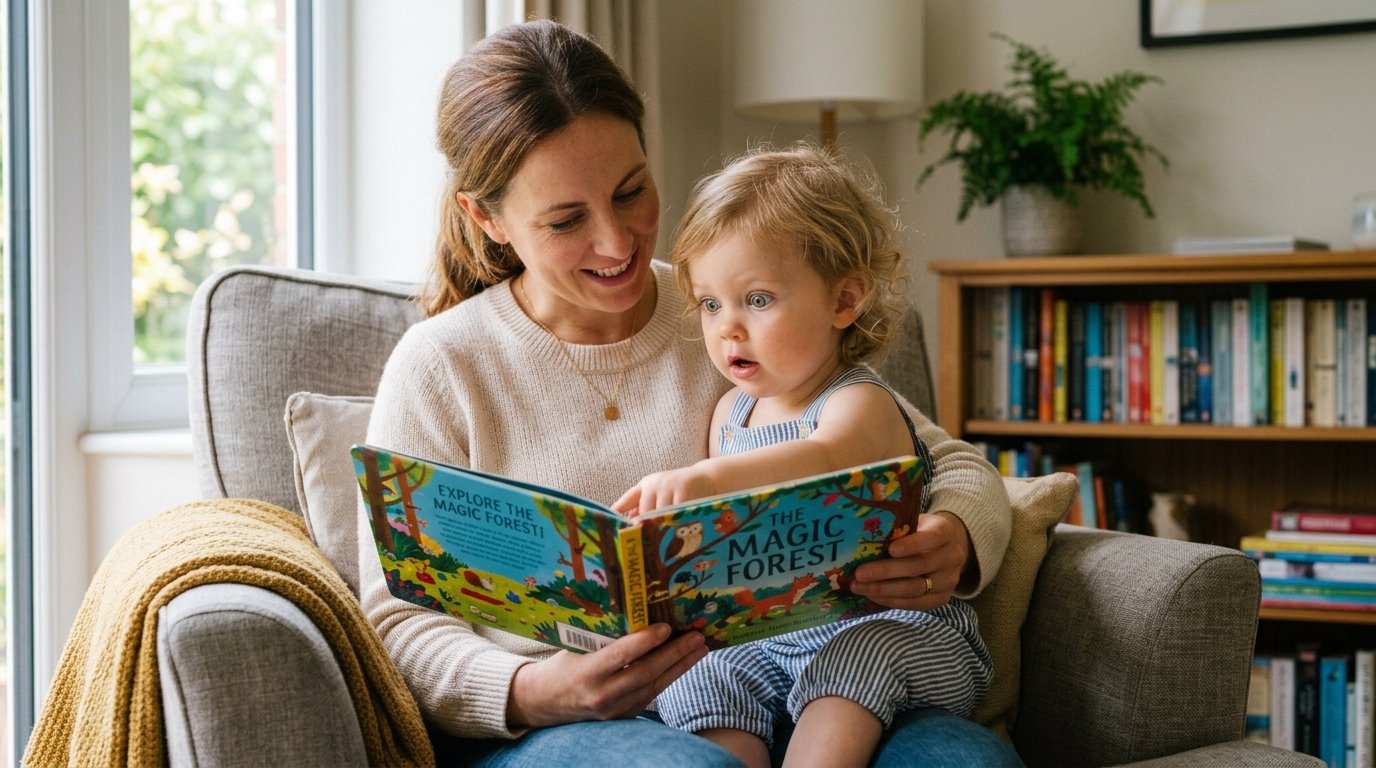
This is the highest-value technique on this page and no competitor explains it. It is called dialogic reading, and the core idea is that the child should gradually become the storyteller while you become the listener.
On a book you have already read once, run this loop on most pages. The acronym is PEER:
- P, prompt. Ask your child to say something about the book. Point at something and ask what it is.
- E, evaluate. Respond to what they said.
- E, expand. Rephrase it and add a little. Not a correction, an extension.
- R, repeat. Ask the prompt again so they get to use the expanded version.
In practice: you point at a fire engine and ask what it is. Your child says ‘truck’. You say ‘that’s right, it’s a red fire truck. Can you say fire truck?’ They say ‘fire truck’. That whole exchange takes eight seconds and it is the entire technique.
What the evidence actually shows, stated honestly. A review by the What Works Clearinghouse found dialogic reading had positive effects on oral language, with an average improvement of around 19 percentile points, though the range across studies was wide. It found no discernible effect on phonological processing. So this is a vocabulary and language tool, not a substitute for the sound work below. Both matter, and they do different jobs.
The Five Prompts: CROWD
PEER is the loop. CROWD is the five kinds of prompt you can start it with. Vary them rather than asking the same question every night.
- C, completion. Leave the last word of a line for them to fill in. Works best with rhyming or repetitive books, and it teaches the structure of language.
- R, recall. Ask what happened. Builds plot and sequence. Works with any book except alphabet books.
- O, open-ended. ‘Tell me what’s happening on this page.’ Needs a rich illustration, and builds fluency and attention to detail.
- W, wh- questions. What, where, when, why, how. This is the one that teaches new vocabulary.
- D, distancing. Connect the book to their own life. ‘When did we see a digger?’ Bridges the book and the world.
Age guidance from the technique’s originator: completion, open-ended and wh- prompts suit younger children. Recall and distancing are harder and mostly belong to four and five year olds.
Three practical notes. Read less and less of the printed text on each reread. Mix prompts with straight reading, because turning every page into a quiz ruins it. And stop before it stops being fun.
Activities for Phonological Awareness
The top-tier predictor, and the one most lists barely touch. All of this is oral. No letters, no paper, no purchases.
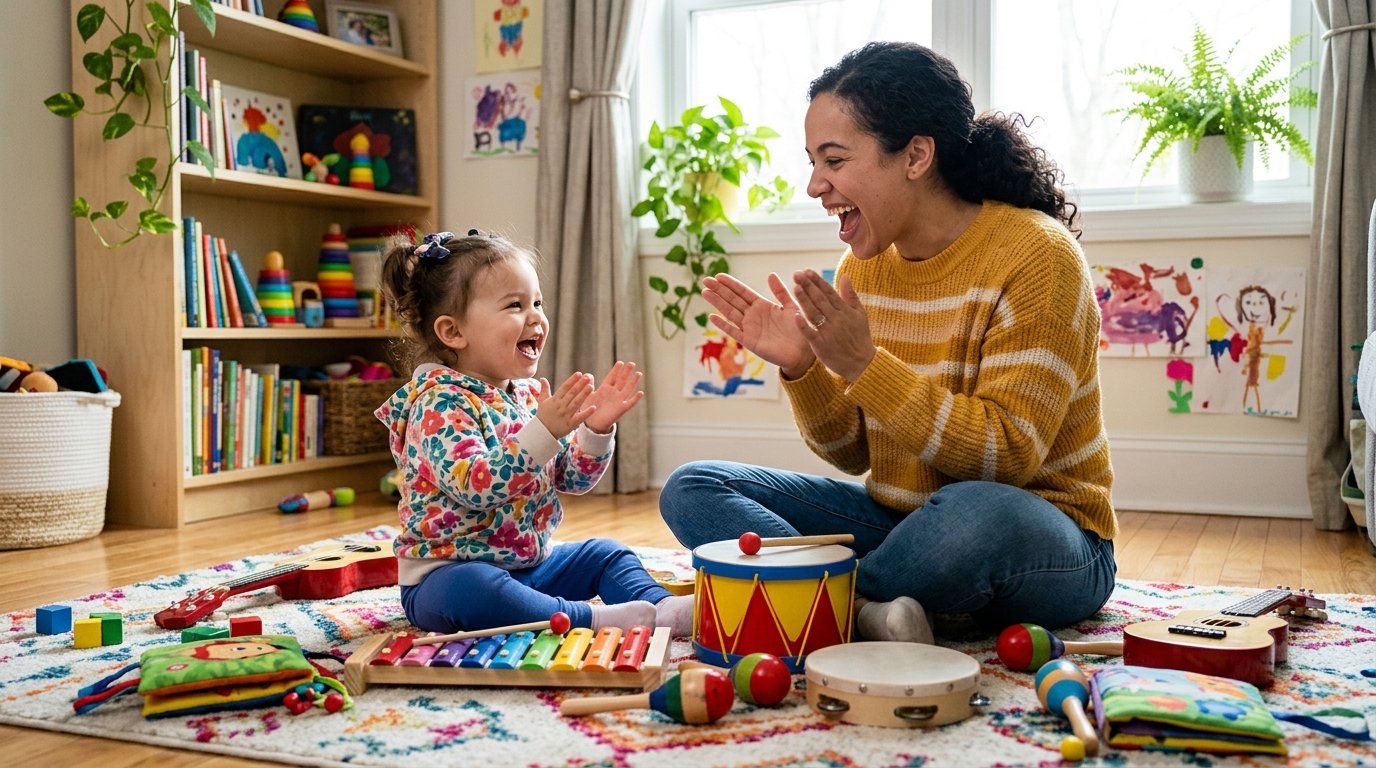
- Nursery rhymes and songs, daily, the same few on repeat. Repetition is doing the work here, not variety. From 1 year.
- Pause before the rhyming word and let them supply it. ‘Twinkle twinkle little…’ From 2 years.
- Clap the syllables in names at dinner. Gran-ny. Ba-na-na. From 3 years.
- I spy with the sound, not the letter name. ‘I spy something starting with mmm.’ Say the clipped sound, not ’em’. From 3 years.
- The silly name game. Change one sound and see if they notice. Sam, Bam, Ham. From 3 years.
- Sort two objects by their first sound into two piles. From 3 and a half.
Activities for Letter Knowledge
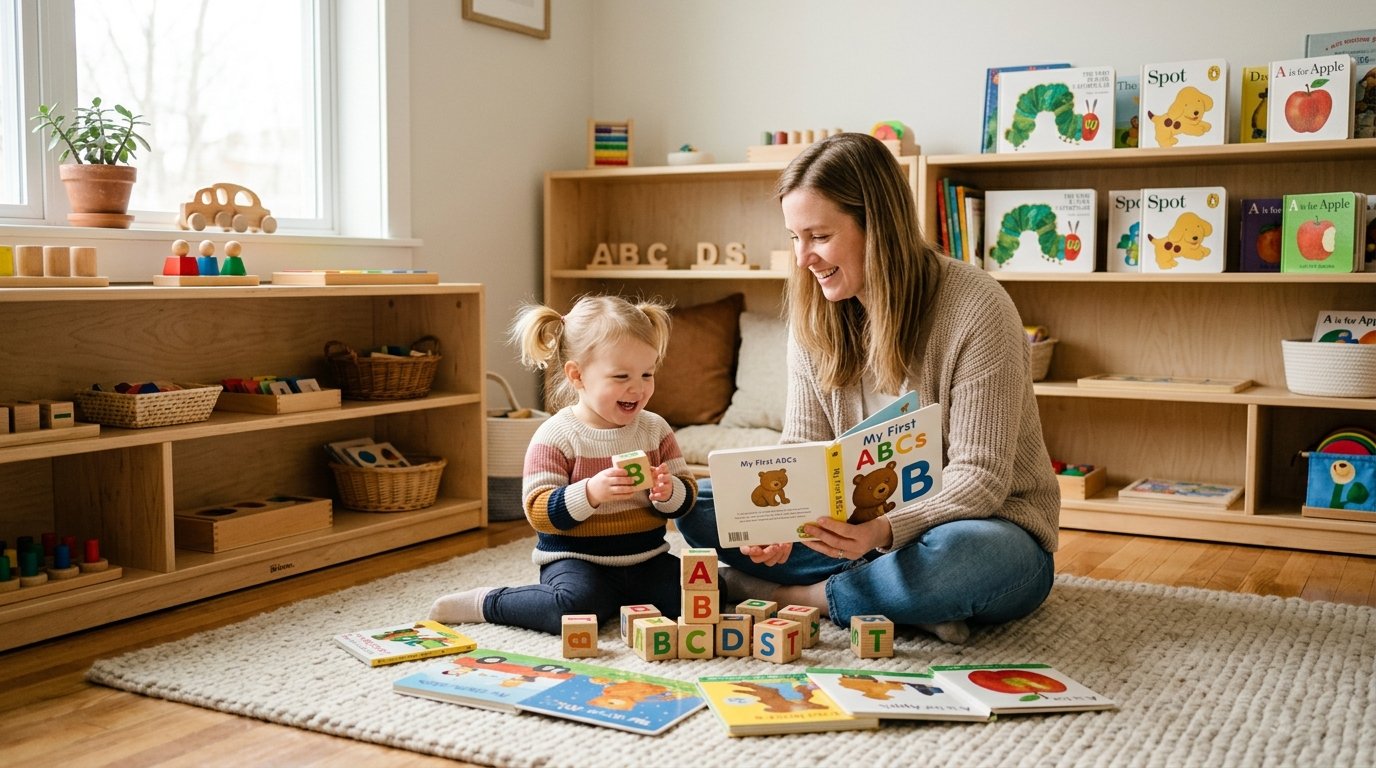
The other top-tier predictor. Sounds before names, and their own name before the alphabet.
- Their name in print where they see it daily. Bedroom door, coat peg, cup. The letters of their own name are almost always the first a child learns. From 2 years.
- Spot the first letter of their name in the wild. Shop signs, cereal packets, number plates. From 3 years.
- Trace letters in spilled flour, bath steam, sand or mud. The finger movement matters as much as the shape. From 3 years.
- Sing the alphabet, then stop and point at one letter and name it. The song alone teaches sequence, not letters, which is a distinction worth knowing. From 3 years.
- Magnetic letters on the fridge. The one purchase on this page genuinely worth making. From 2 and a half.
Activities for Print Awareness
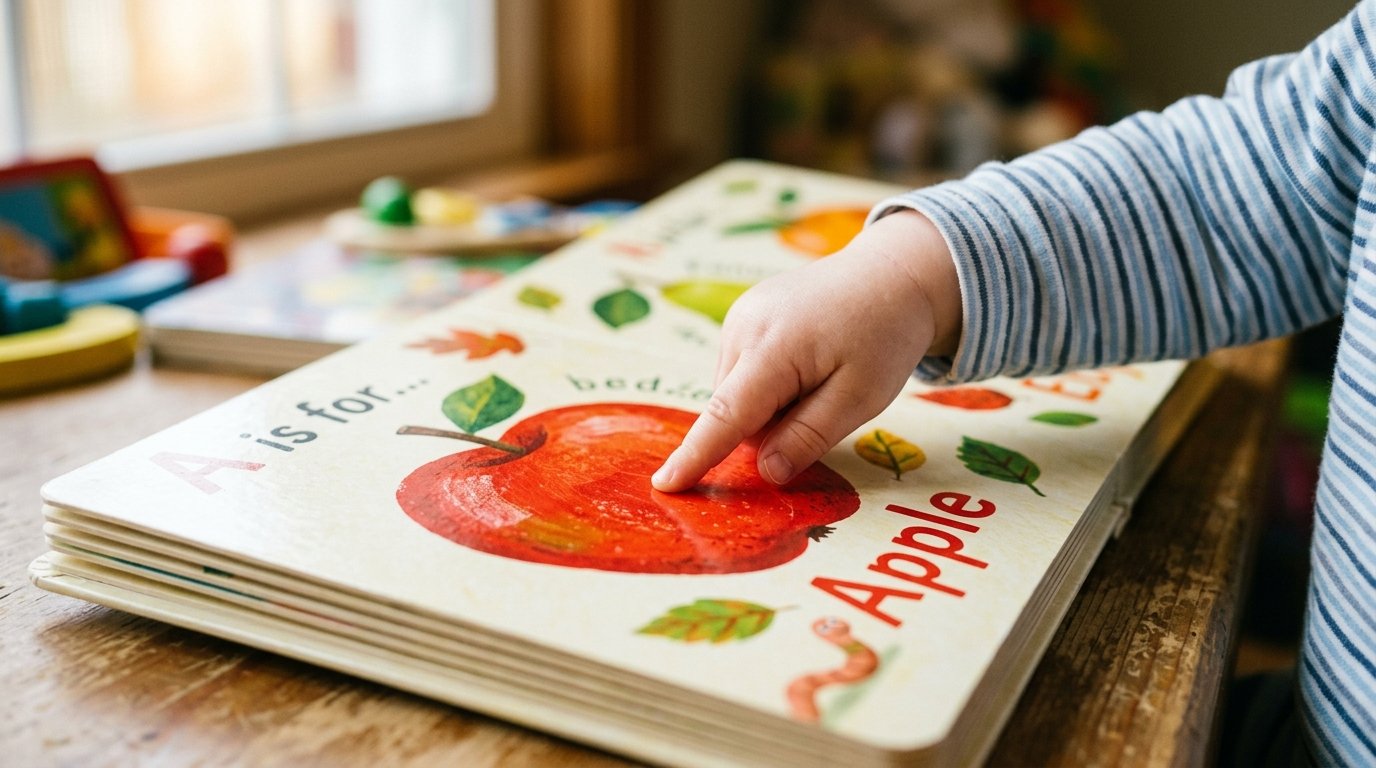
Understanding that those marks carry meaning, run left to right, and are what you are reading from. Nearly free.
- Let them hold the book, turn the pages and chew it. At one, the physical object is the lesson. From 1 year.
- Hand them the book upside down and wait. When they turn it round, they have understood something real. From 2 years.
- Run your finger under the title as you say it. Three seconds, every book, and it teaches directionality without a lesson. From 2 years.
- Read the world aloud. Road signs, the bus number, the cereal box, the sign on the shop door. From 2 years.
- Let them scribble a shopping list beside yours, then ‘read’ it in the shop. From 3 years.
Activities for Vocabulary and Narrative
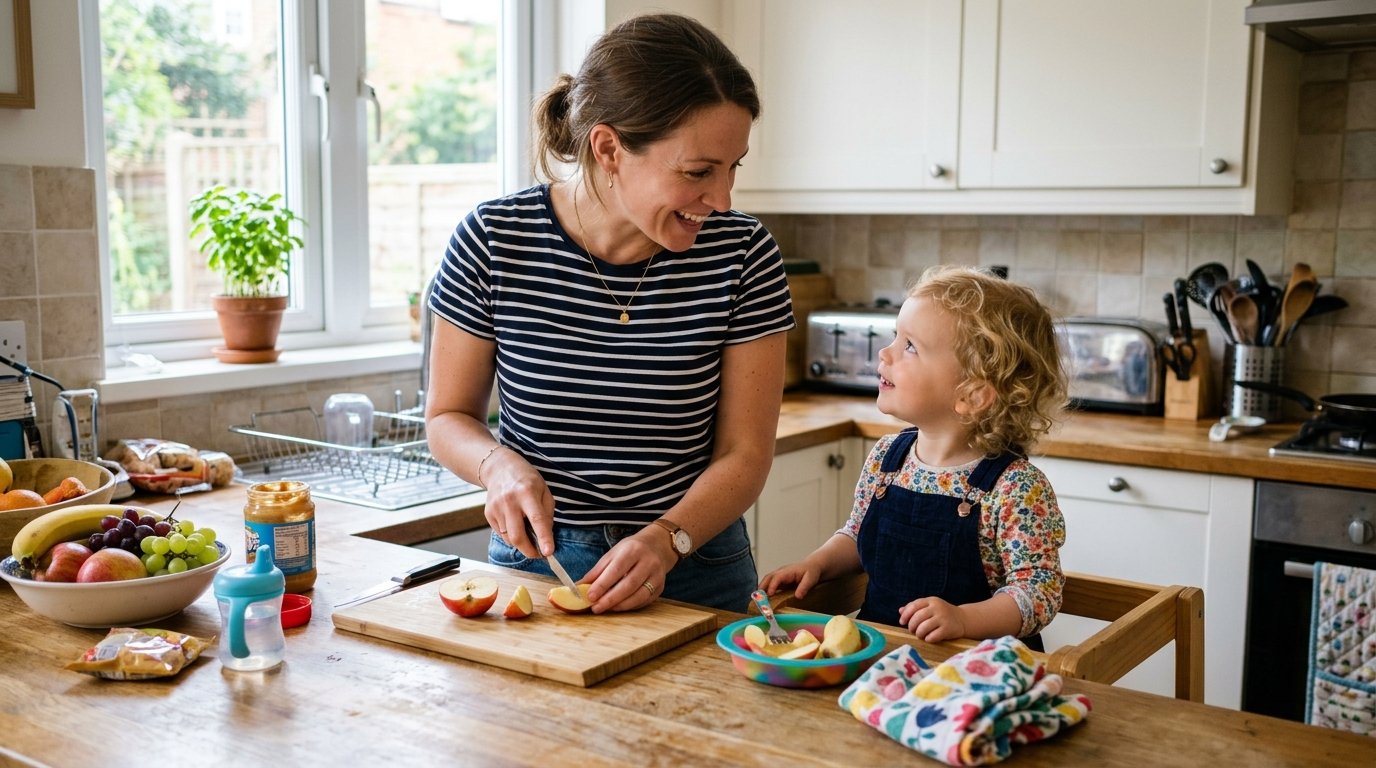
- Narrate what you are doing, in full sentences. Nappy changes and cooking are several minutes of one-to-one language, several times a day. From birth.
- Wh- prompts on the pictures. ‘What is she doing?’ rather than ‘what colour is that?’ Open beats closed. From 2 years.
- Reread the same book on demand, dropping more of the printed text each time until they are telling it. From 2 years.
- Retell their day back to them at bedtime as a story with a beginning, a middle and an end. This is narrative structure, delivered for free. From 2 and a half.
- Ask what-if questions about real life, not about the book. From 3 years.
- Name things precisely. Not flower, daffodil. Not dog, spaniel. From 2 years.
Activities for Motivation
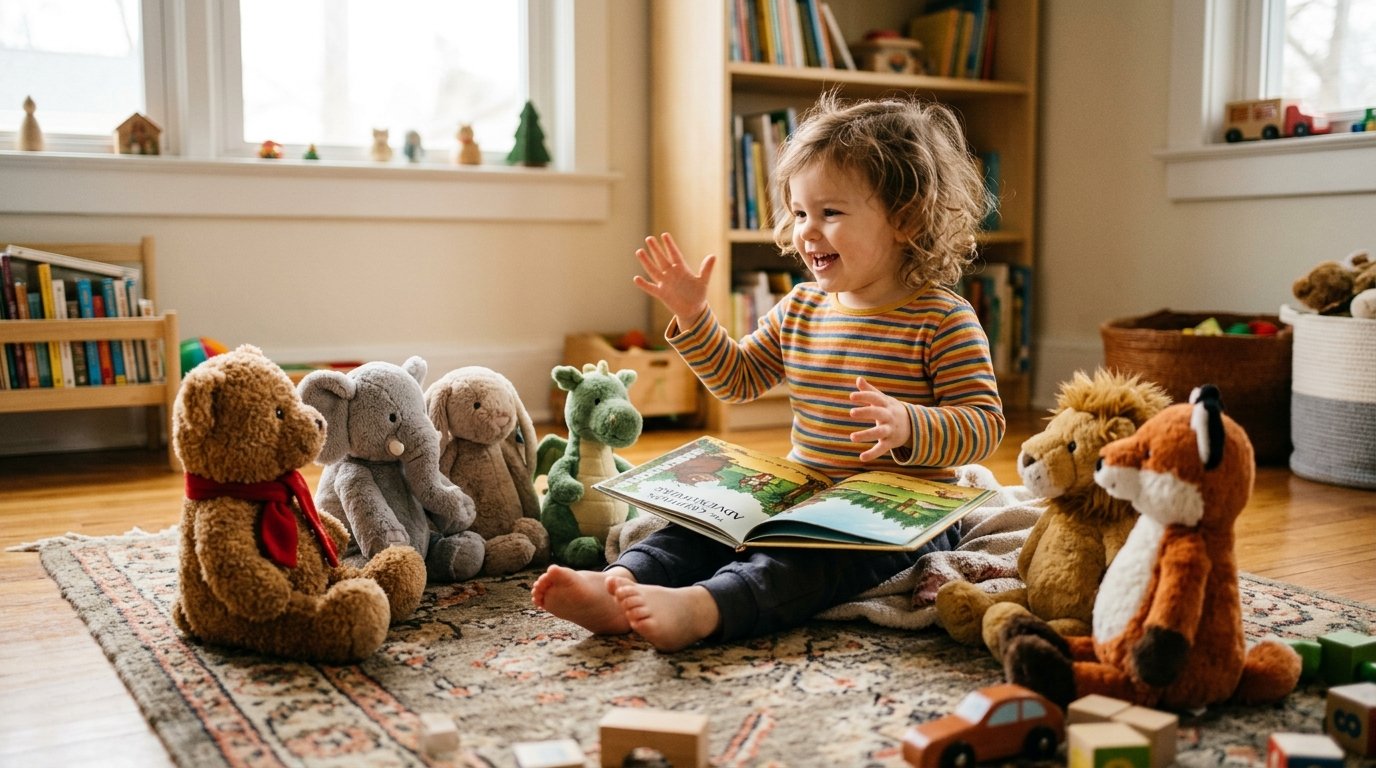
Underrated, and the one that determines whether any of the rest survives past age six.
- A library card in their name, and they choose. Even if they choose badly. From 2 years.
- Let them ‘read’ a memorised book back to you and treat it as reading, because functionally it is.
- Never make finishing a book compulsory.
- Keep books face out and within reach, five or six at a time rather than forty.
- Let them reread the same book forty times. Rereading is one of the few things everyone in reading research agrees about.
How Much Does Reading Aloud Actually Matter?
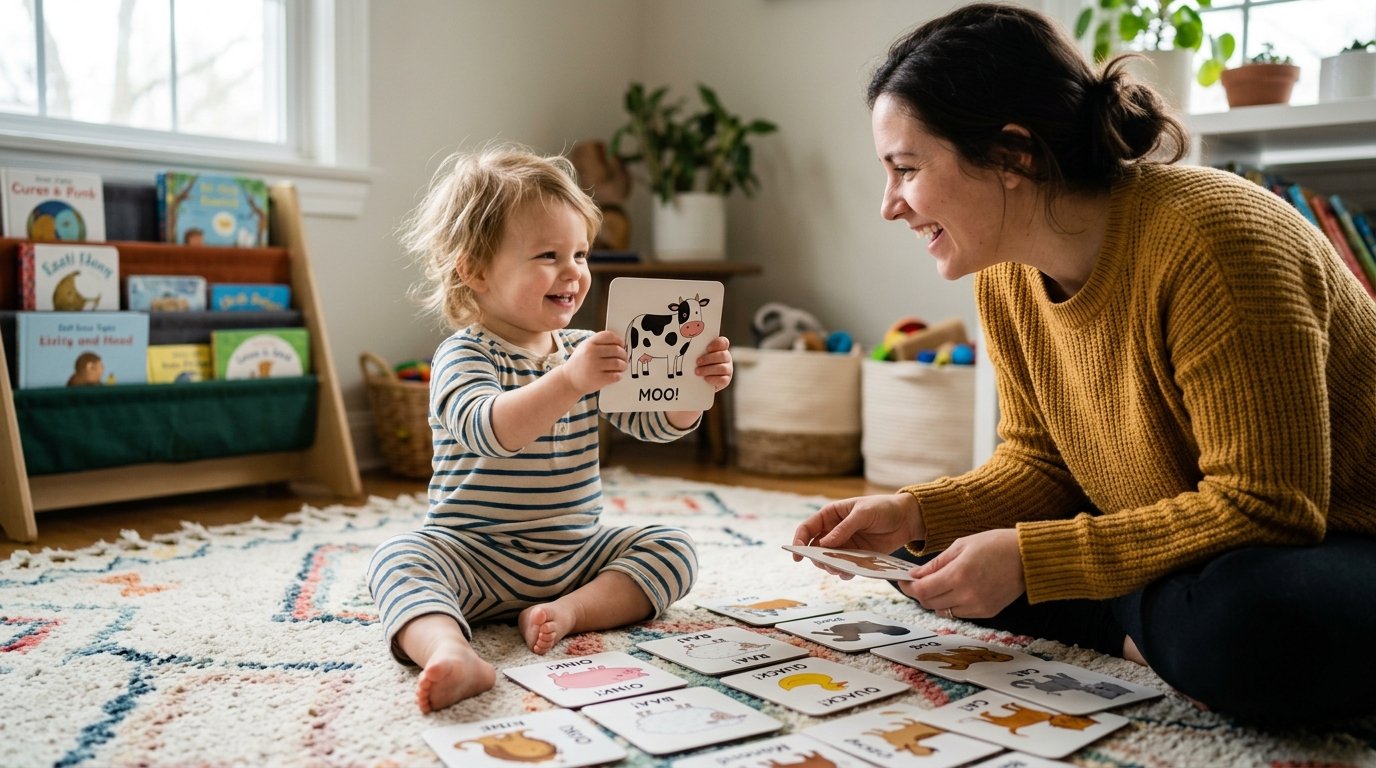
A fair amount, and the size of the effect is known reasonably well.
- A 1995 meta-analysis found shared book reading accounted for roughly 8 percent of the variance in language growth and later reading achievement.
- A larger 2011 meta-analysis covering 99 studies and nearly 7,700 children found that in preschool and kindergarten, print exposure explained about 12 percent of the variance in oral language.
Eight to twelve percent is a real effect and it is not everything. Reading aloud is one meaningful input among several, not a guarantee. The honest framing is that daily reading reliably helps, that the technique matters as much as the frequency, and that a parent who reads one book well with PEER prompts is doing more than a parent who reads four books flatly.
What to Skip
- Baby reading programmes, DVDs and flashcard systems. The trial described above found no effect on 13 of 14 measures.
- Worksheets for toddlers. A toddler tracing a letter on paper is doing fine motor work, not literacy work, and there are better ways to do both.
- Teaching letter names before letter sounds. The name ‘double-u’ tells a child nothing about the sound the letter makes.
- Screen-based phonics apps at this age. No evidence they beat five minutes of I spy, and they cost more.
- Formal lessons. Nothing on this page should look like a lesson. If it stops being a game, stop.
When to Ask Someone
Most variation at this age is normal and most late talkers turn out fine. Worth raising with your health visitor or doctor if, by around two and a half to three, your child is not combining words, does not seem to hear you consistently, has stopped using words they previously had, or shows no interest in books at all across several months.
Hearing is the first thing to check. Intermittent hearing loss from repeated ear infections is common, easy to miss, and directly affects the sound awareness everything above depends on.
Frequently Asked Questions
How do you teach a 2 year old to read?
You do not, and a randomised trial of a commercial baby-reading package with 117 infants found no effect on 13 of 14 measures of early reading. What two year olds can do is build the foundations: hearing sounds in words, learning that print carries meaning, and building language through conversation and books. That is the real work of this age.
What are the most important pre-reading skills?
According to the National Early Literacy Panel, the strongest predictors are alphabet knowledge, phonological awareness, rapid naming, writing their own name, and phonological memory. Sound awareness and letter knowledge are the two most useful for a parent to focus on, and sound awareness is the one most activity lists neglect.
What should a 2 year old be reading?
Board books they can hold and destroy, with simple pictures, repetition and rhyme. Rhyming books earn their place twice over, because the rhyme itself builds phonological awareness. Let them choose, let them reread, and expect the same book nightly for weeks.
How long should reading activities last?
Five to fifteen minutes, several times across the day, and always stopping before they want to. Every activity on this page fits inside an existing routine rather than adding one, which is the only reason they get done at all.
Is it bad if my toddler will not sit still for a book?
No, and it is extremely common. Try reading while they play nearby, reading in the bath or the car, using board books they can hold, or doing more of the oral activities on this page instead. Sitting still is a separate skill from listening and develops later.
Should I use flashcards?
Not at this age. The evidence for commercial flashcard and baby-reading systems is poor. Magnetic letters on the fridge do the same job better because your child controls them, and they cost a fraction as much.