
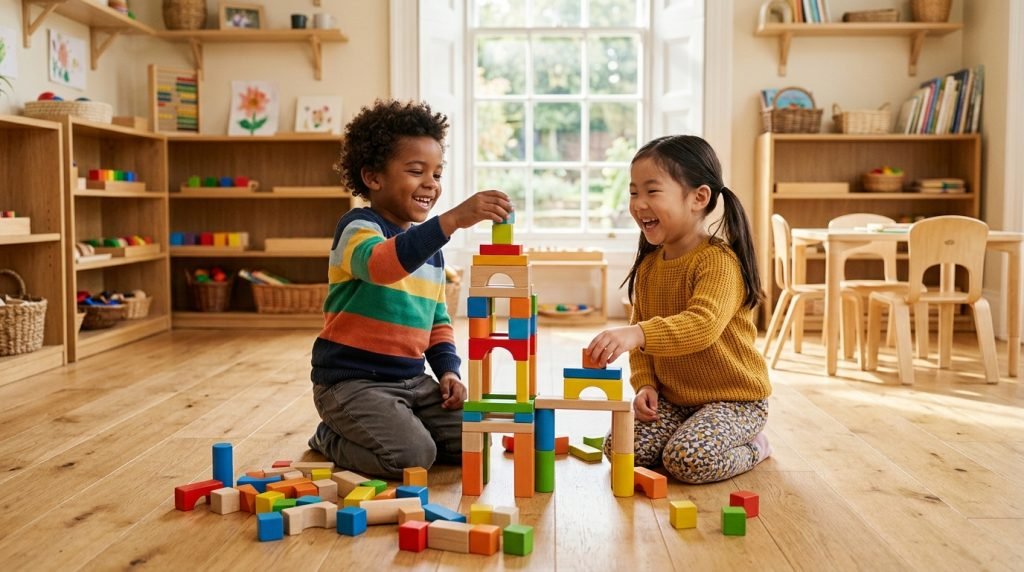
How Block Play Helps Children Learn and Grow
Introduction:
Children love to build towers, bridges, castles, and colorful creations using blocks. While these activities may seem like simple play, they are actually helping children develop important skills that support learning and everyday life. At Adventure Montessori, we encourage block play because it inspires creativity, problem-solving, teamwork, and confidence.
Every block a child stacks is a step toward building stronger thinking skills and a lifelong love for learning.
Why Is Block Play Important?
Building with blocks allows children to learn through hands-on exploration. As they create different structures, they begin to understand how shapes, sizes, and balance work together.
Block play helps children:
- Improve fine motor skills.
- Develop hand-eye coordination.
- Encourage creative thinking.
- Build patience and focus.
- Strengthen problem-solving skills.
- Support early math concepts.
- Improve spatial awareness.
- Increase confidence through achievement.
Fun Building Activities:
Children can enjoy many exciting building challenges using simple materials.
Here are a few simple ideas:
Tower Challenge:
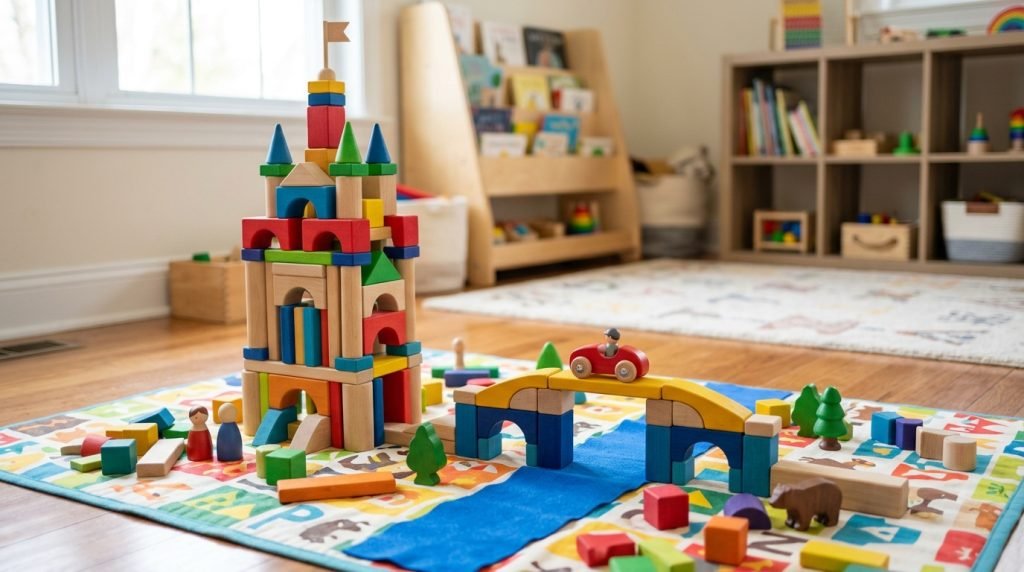
Invite children to build the tallest tower they can using wooden or plastic blocks. Encourage them to test different designs to make the tower stronger.
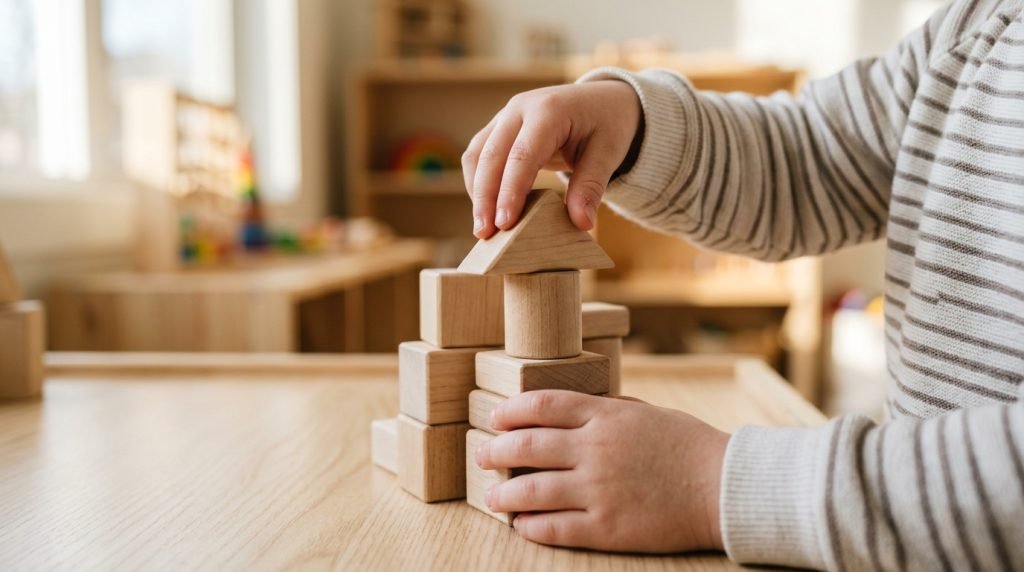
Build a Bridge:
Ask children to create a bridge that can hold a toy car or small object. This activity introduces basic engineering ideas while encouraging creativity.
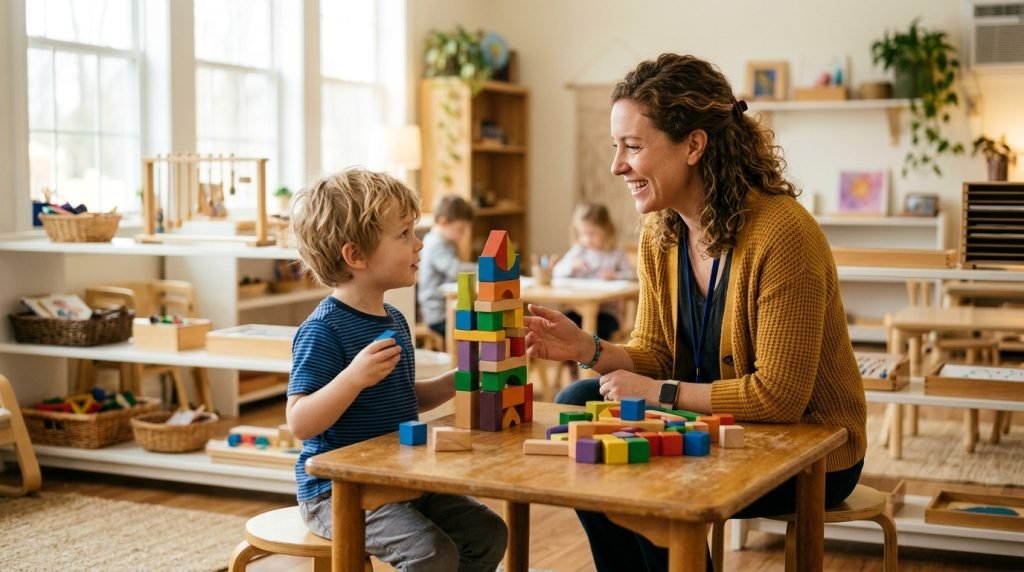
Copy the Design:
Build a simple structure and ask your child to recreate it using the same blocks. This improves observation and attention to detail.
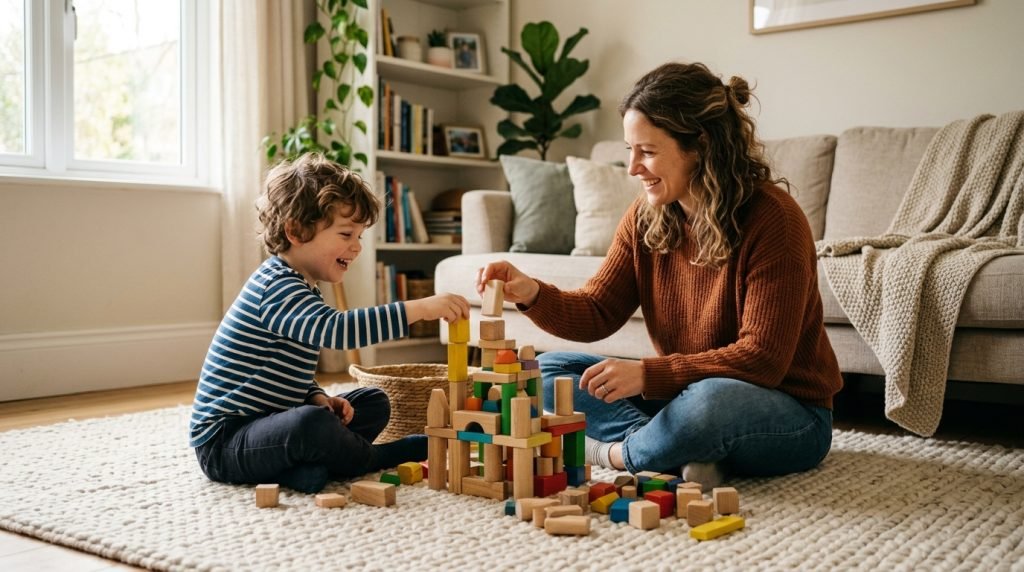
Create a Mini City:
Children can build houses, schools, parks, and roads using blocks. They can also add toy cars and figures to create their own community.
Learning Through Building:
While children play, encourage conversation by asking questions like:
- Which block should go first?
- How can we make the tower stronger?
- What happens if we use a bigger block?
- Can you build something even taller?
- What would you like to build next?
These questions help children think critically and explain their ideas.
Tips for Parents:
Parents can make block play even more meaningful by:
- Giving children enough time to build freely.
- Praising effort instead of perfection.
- Joining in without taking over.
- Encouraging children to solve problems independently.
- Providing different types of building materials.
FAQ:
1. What age is block play suitable for?
Block play is suitable for toddlers, preschoolers, and young children with age-appropriate building materials.
2. What skills do children develop through building activities?
Children improve creativity, fine motor skills, coordination, problem-solving, spatial awareness, and early math skills.
3. Can block play prepare children for STEM learning?
Yes. Building activities introduce basic engineering, mathematics, and design concepts in a fun and engaging way.
4. How long should building activities last?
Most children enjoy building for 20–40 minutes depending on their age and interest.
5. Can parents join the activity?
Absolutely! Building together encourages communication, teamwork, and family bonding.