
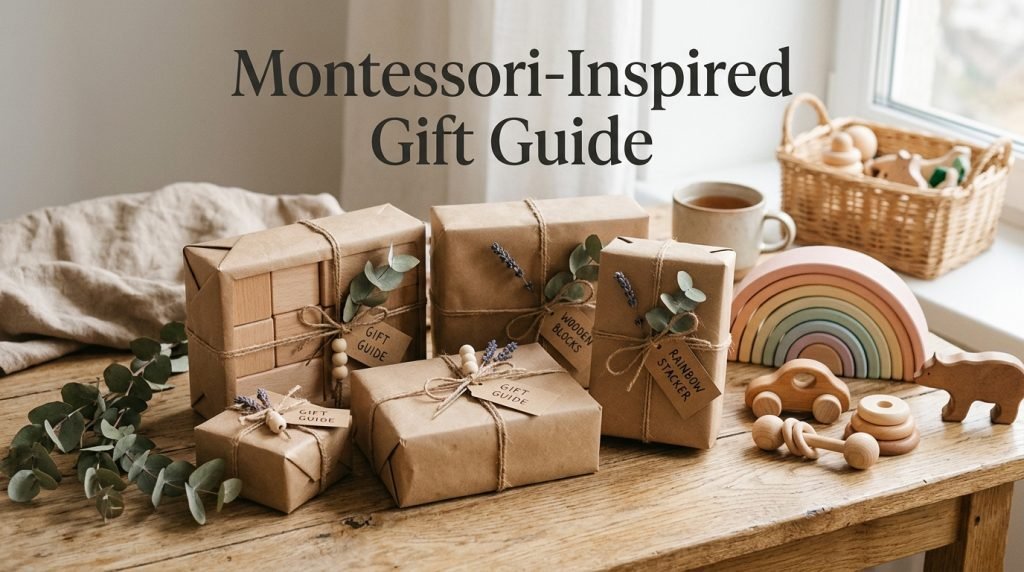
Short answer: for a first birthday, the PlanToys Shape Matching Puzzle at about $18 or the Geo Shape Sorter Bucket at about $22 are the safest good choices. At two, a PlanToys Cleaning Set around $40, because practical life beats toys at that age. At three, the Grimm’s Large Rainbow at about $115 if you want one thing that lasts years. At four to six, a marble run such as Hape Quadrilla around $47. And the most useful thing in this guide is not a product: the word Montessori is not trademarked, so a toy labelled Montessori on a marketplace has been checked by nobody. Two such toys were recalled in 2026 alone.
Every Montessori gift guide I could find has the same two problems. None of them gives you a price, and none mentions that some of the most heavily marketed Montessori toys have been recalled. The three that rank above this page were last updated in 2018, 2020 and a year with dead links to shops that have since closed.
So: real products, real prices checked on 18 August 2026, organised by age, plus the safety information nobody in this niche publishes. Prices move, so confirm before you order.
Montessori Gift Guide
What Actually Makes a Gift Montessori
Four tests. A gift that passes most of them will work regardless of how it is marketed.
- It does one thing. Isolation of concept is the actual principle. A toy that stacks, sorts, posts, lights up and plays music teaches none of those properly.
- The child does the work, not the toy. If it performs and your child watches, it is entertainment. Batteries are usually the tell.
- It has a control of error. Your child can see for themselves whether it is right, without asking you. A shape only fits one hole.
- It is real, or it is realistic. Real tools that work, and realistic images rather than cartoons, particularly under six.
Nothing on that list requires wood, and nothing requires the word Montessori on the box.
The Word Montessori Is Not Protected, and Why That Matters
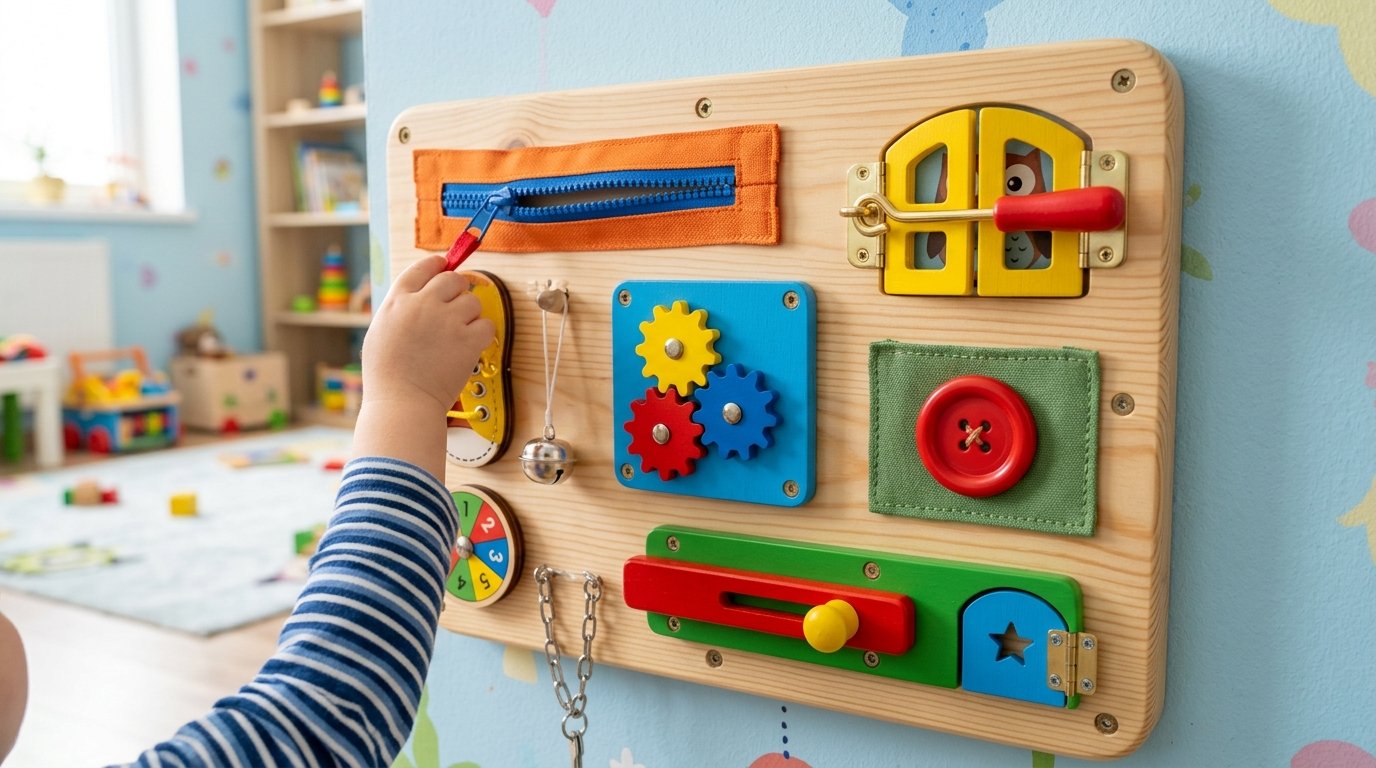
This is the most useful section in this guide and no competitor has it.
Montessori is not a trademark and there is no certification. Anyone can print it on a box. That is why marketplace listings are full of Montessori busy boards and Montessori stacking toys made by companies you have never heard of. The label tells you nothing about whether the toy was tested.
The consequences are documented. In 2026 alone, the CPSC recalled a TooyBing Wooden Bead Stacking Toy (August 2026, around 21,758 units, for violating the small parts ban) and a Small Fish Montessori Busy Board (June 2026, for magnet ingestion risk). In December 2025 the CPSC issued a warning about Kindly Toys busy boards. Magnet-liberation recalls are a continuing pattern across this category.
Established brands are not immune, but the record is different in kind. Lovevery has had two recalls: the Slide and Seek Ball Run in January 2024, around 47,000 units, because a wooden knob could detach and pose a choking hazard, with a free replacement offered; and a stainless drinking cup in 2022. I found no recent US recall for Grimm’s, Hape, PlanToys, Djeco, Melissa & Doug or Manhattan Toy.
The most serious one is not Montessori-branded at all: KidKraft Farm to Table play kitchens, recalled July 2025, around 192,000 units, for a strangulation hazard, following one death.
- Buy from a brand with a name and an address, not a marketplace acronym.
- Check the CPSC recall list before buying anything second-hand or unfamiliar. It takes thirty seconds.
- Treat magnets as the highest-risk category in this whole space. Loose magnets that come free of a toy are a genuine emergency, not a bruise.
- Small parts matter most under three. If it passes through a toilet roll tube, it is too small.
Age 1: The First Birthday
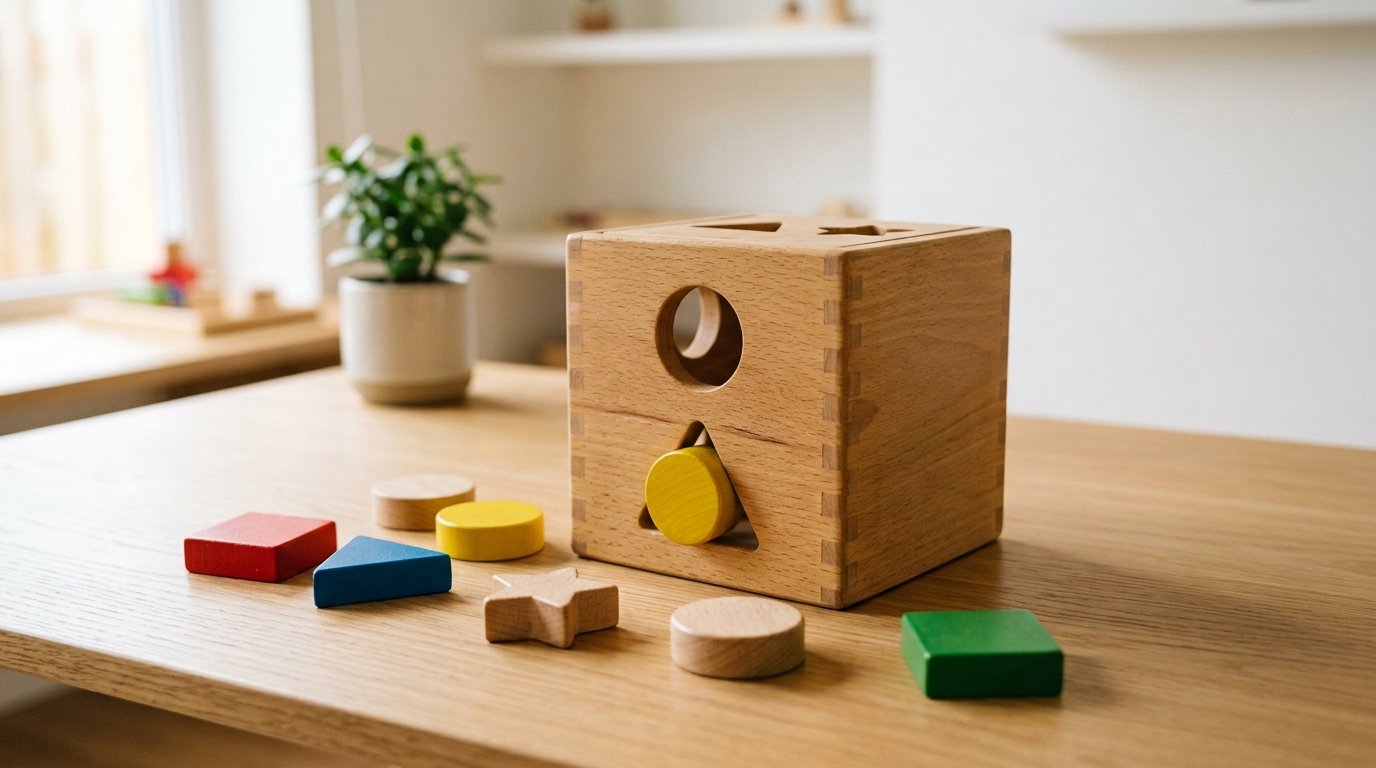
At one, the drives are posting, putting in and taking out, stacking and cause and effect. Almost nothing needs to be complicated.
- PlanToys Shape Matching Puzzle, about $18. Three knobbed shapes, each fitting one hole only. Self-correcting, which is the point. The single best-value first birthday gift here.
- PlanToys Geo Shape Sorter Bucket, about $22. Posting and sorting, the classic work of this age.
- Honeysticks Super Jumbo Bath Crayons, 6-pack, about $22. Chunky beeswax suits a whole-hand grip, and the bath contains the mess entirely.
- Wee Gallery Soft Block Baby Animals, about $59. High-contrast, soft, easy to grip. A gentler option if the child is on the younger side of one.
- PlanToys Hammer Balls, about $60. Hand first, then hammer. Very satisfying cause and effect, and it lasts into the second year.
What to skip at one: anything with a screen, anything with batteries, and any puzzle with more than about four pieces.
Age 2
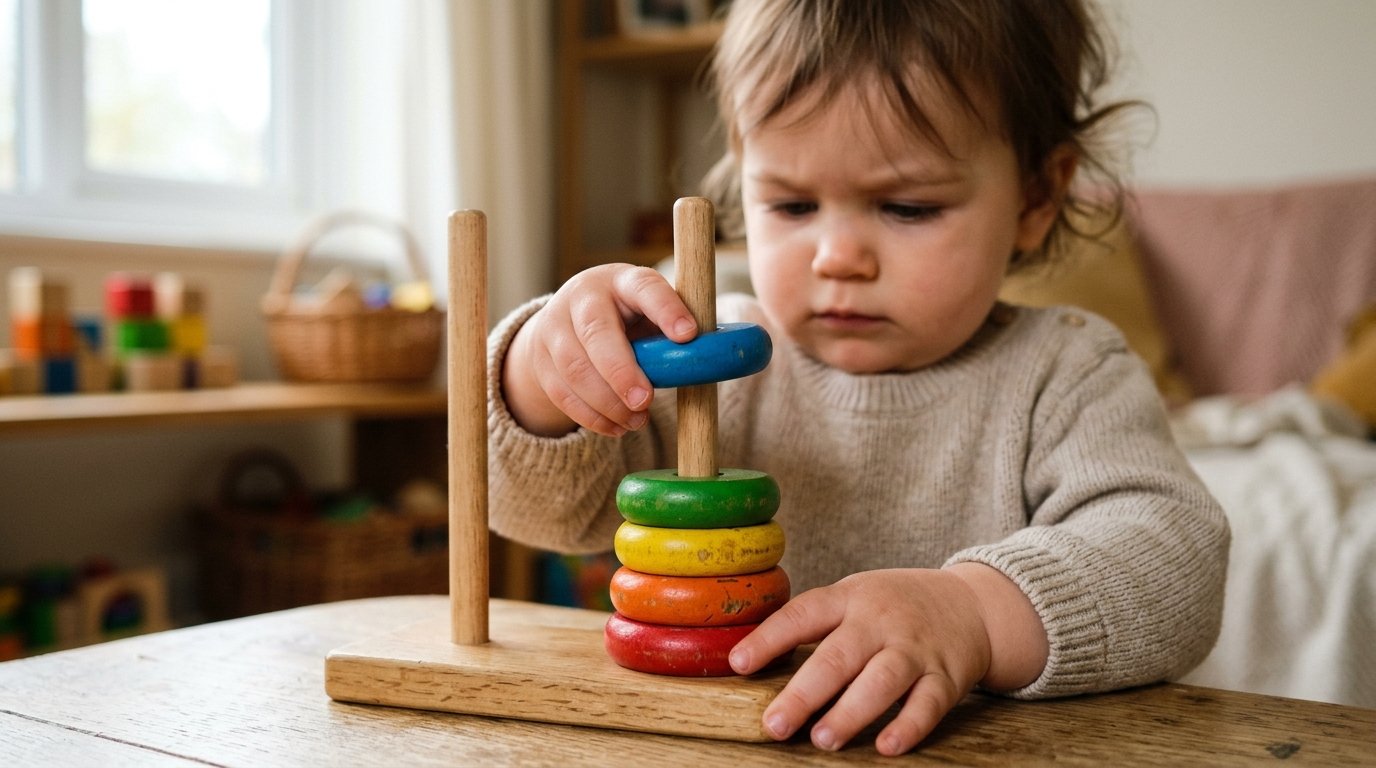
Two is the age where practical life beats toys, and where a gift that lets a child join in what you are doing gets used far more than one that entertains them.
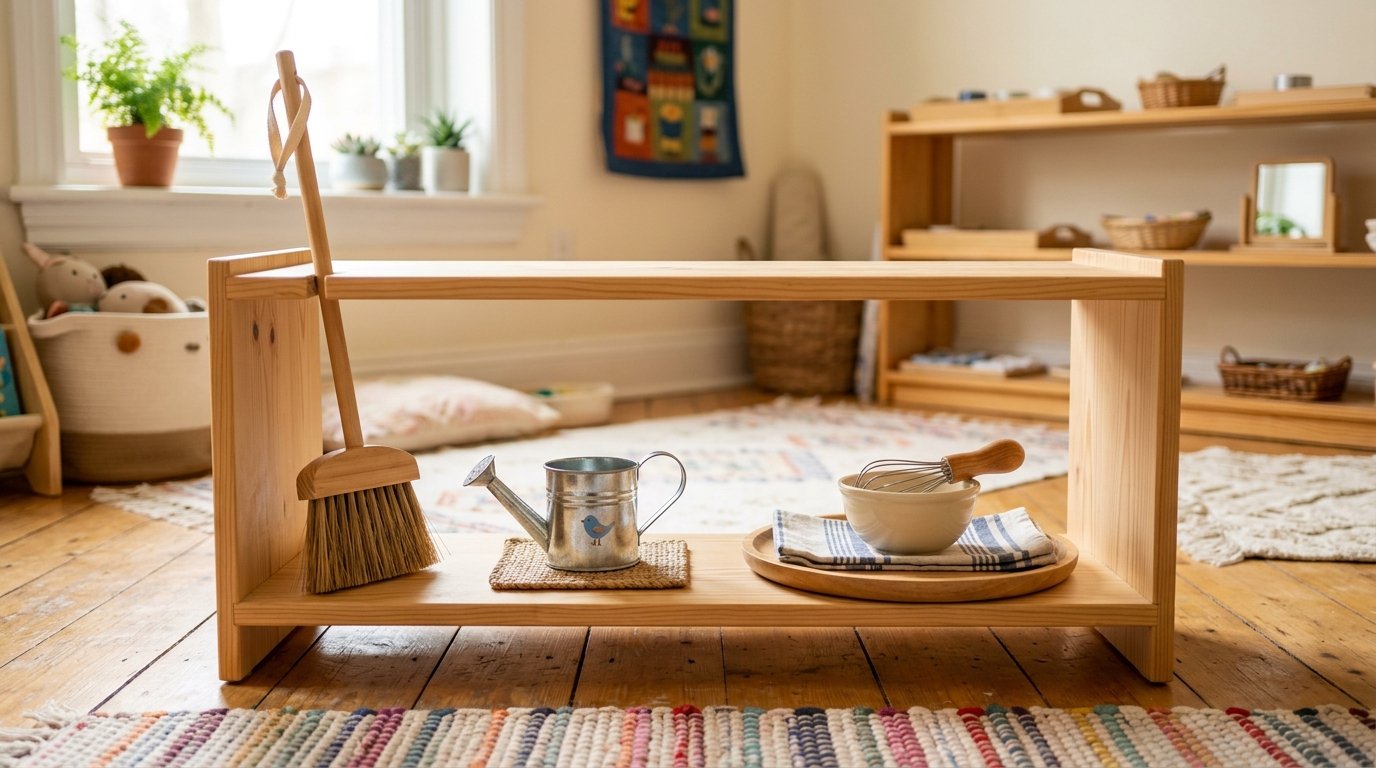
- PlanToys Cleaning Set, about $40. Broom, dustpan, bucket and spray bottle at child scale. Sounds like a joke gift. It is consistently the most used thing on this list.
- Wee Gallery Nesting Blocks, about $49. Ten graded blocks. Nesting, stacking and size ordering in one object.
- Wee Gallery Wooden Tray Puzzle, about $48. Six pieces that also stand up as figures, so it does two things without being a do-everything toy.
- Stockmar Beeswax Block Crayons, 8-pack, about $21. Flat blocks, no tripod grip required, and the colour quality is genuinely different from wax crayons.
- PlanToys Lacing Skills Set, about $30. First threading, contained on a tray.
- Piccalio Foldable Toddler Tower, about $239. Rated 18 months and up. Expensive, and the single item most likely to change your daily routine, because it puts your child at the counter with you.
Age 3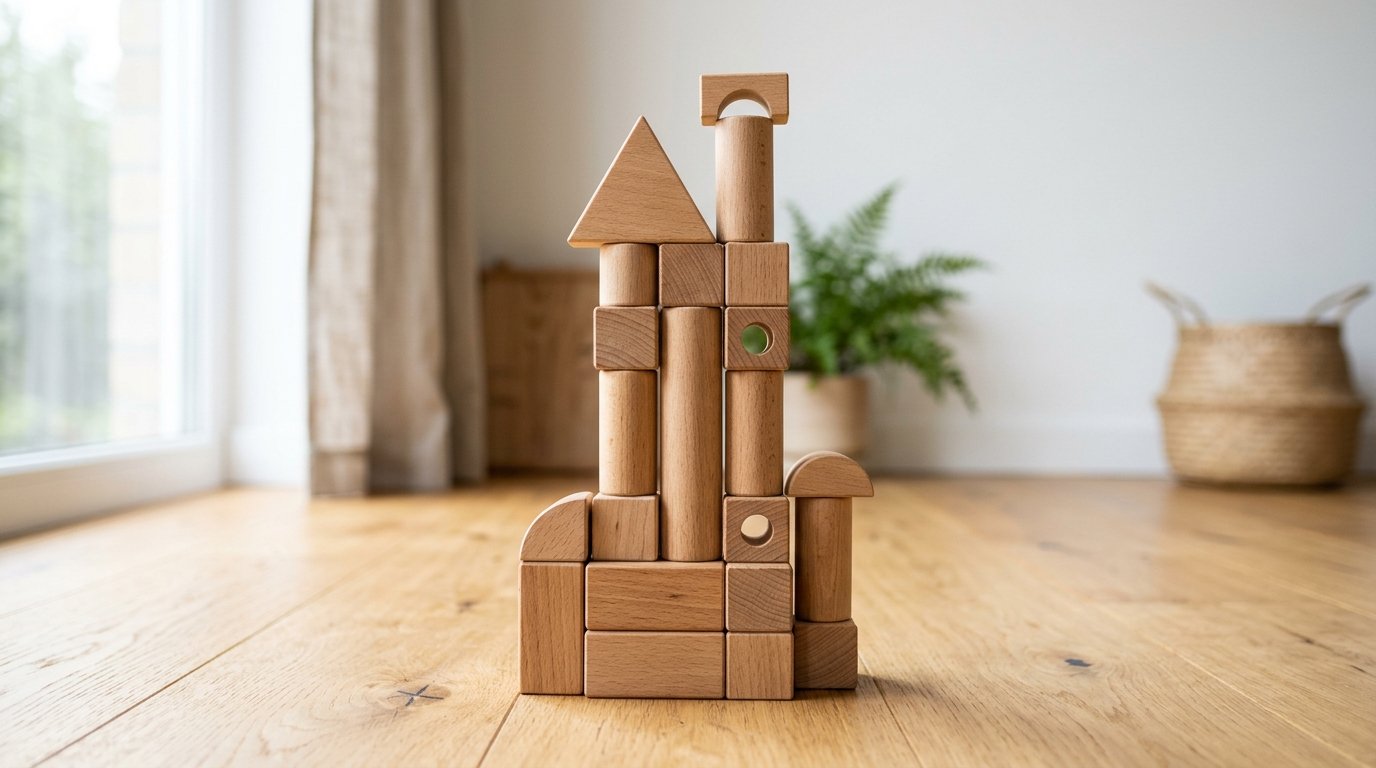
Three is when open-ended materials start to earn their keep, because the child can now invent what to do with them.
- Grimm’s Large Rainbow, 12 pieces, about $115. The most recommended open-ended toy in this niche, and deservedly. It nests, stacks, bridges, tunnels, fences and becomes a ball run. Tagged 12 months to 7 plus, and it holds resale value. Note: stock was showing as zero at the main US retailer when I checked, so verify availability.
- PlanToys Gardening Set, about $36. Real trowel, fork and watering can at child scale.
- Djeco Construction Site Giant Floor Puzzle, 12 pieces, about $29. Supersize pieces, stated 3 to 6.
- Montessori Services Red Letter Alphabet Book, about $22. Tactile phonetic letters, ages 2 to 6. Pairs with the sound-based approach rather than teaching letter names.
- Stockmar Beeswax Stick Crayons, 8-pack, about $21. The step up from block crayons once a tripod grip is forming.
Ages 4 to 6
Now the child can follow a sequence, cooperate, and stay with something across several sittings.
- Hape Quadrilla Race to the Finish, about $47. Entry-level marble run. Real physics, endlessly reconfigurable.
- Connetix 92-Piece Ball Run Pack, about $109. Magnetic tiles with a gravity run. Note the magnet caution above applies to cheap imitations, not to Connetix, which is a tested brand.
- Montessori Services Red Print Movable Alphabet with Pocket Chart, about $130. The real material, for building words before handwriting is comfortable. Expensive and the most genuinely educational thing on this page.
- Djeco Hop! Hop! Hop! Cooperation Game, about $40. Cooperative rather than competitive, ages 4 to 8.
- Yoto Player third generation, about $110, or the Yoto Mini, about $68 to $80. Screen-free audio the child operates alone. You already have a Yoto versus Toniebox post, so link it.
- Nienhuis Look and Lace, about $29. Pre-sewing, and a good bridge into real handwork.
Genuinely Good Gifts Under $25

The cheapest things on this page are also, honestly, among the most used. Most are from For Small Hands, which is the retail arm of Montessori Services.
- Vegetable chopper with wooden handle, about $5. A real tool a two-year-old can use safely on a banana or a cucumber.
- Whisk broom and dustpan set, about $7. Child-sized and actually functional.
- Children’s corn broom, about $13.
- Kids’ watering can, about $15.
- Kids’ garden hand tools, about $15.
- Sarah’s Silks play silk, 35 inch, about $19. The most open-ended object here. Becomes a river, a cape, a roof, a baby blanket.
- PlanToys Shape Matching Puzzle, about $18. Also the age 1 pick, and it belongs in both lists.
The $25 to $60 Range
- PlanToys Cleaning Set, about $40.
- PlanToys Lacing Skills Set, about $30.
- Piccalio organic linen apron and hat set, about $34. Pairs with any cooking gift.
- Bissell Natural Sweep carpet sweeper, about $42. Not a toy. A real, quiet, battery-free sweeper a child can push. Frequently the sleeper hit of this whole category.
- HABA Flower Garden sorting and stacking, about $60.
Investment Gifts Over $100
Worth it only if the thing spans several years. All of these do, and most hold resale value, which matters more than it sounds when you are spending this much.
- Grimm’s Large Rainbow, about $115. Ages 1 to 7. Check stock.
- Piccalio Acrobat Balance Beam, about $139. Reconfigurable as the child’s balance improves.
- Grimm’s Stairway Building Blocks, 19 pieces, about $150. Heirloom quality, doubles as a marble run.
- Piccalio Convertible Toddler Tower, about $209. Converts into a table and chair, so it works from roughly 2 to 6.
- Piccalio Climber Pikler Triangle Set, about $349. Folds flat, rated 1 to 6, strong resale. See the next section on what it actually is, and on rung spacing.
On subscriptions: Lovevery Play Kits are $80 per kit shipping every two months for 0 to 12 months, and $120 per kit shipping every three months for ages 1 to 4. You can also buy single kits without subscribing, at $96 for baby and $144 for age 1 and up. The kits are yours to keep. Good quality and well sequenced. Also the most expensive way to acquire the same handful of objects, so buy one as a gift rather than committing someone else to a subscription.
Is a Pikler Triangle Montessori?
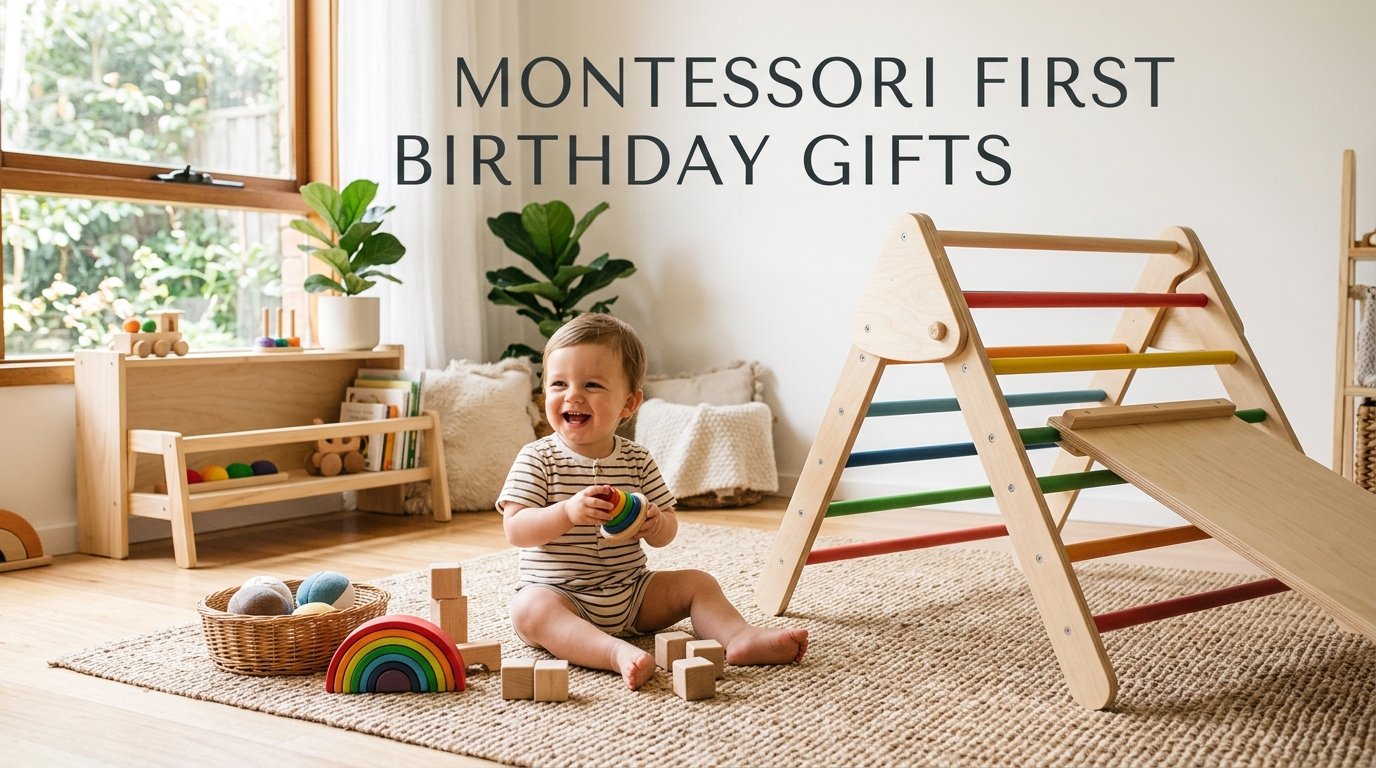
No, and the distinction is worth getting right because everyone gets it wrong, including retailers who advertise them as Montessori climbers.
The triangle was designed by Dr Emmi Pikler, a Hungarian paediatrician who ran the Lóczy institute in Budapest. Pikler and Montessori arrived independently at similar conclusions about freedom of movement and adult non-interference in the first years, which is why Pikler climbers are common in Montessori homes. But it is not a Montessori material, it does not appear in the Montessori albums, and it is not in Montessori classrooms. Montessori-adjacent is the accurate description.
A concrete safety point that is worth more than the terminology. In July 2025 the CPSC wrote to the relevant ASTM committee flagging three issues with indoor triangle climbers: rung spacing, folding-lock reliability, and hinge pinch points. On spacing, the concern is head entrapment, and the guidance direction is that gaps should be either under 3 inches or over 9 inches, never in between. Use that as a buying criterion, and check the folding lock actually locks.
What Not to Buy, and the Reasons Why
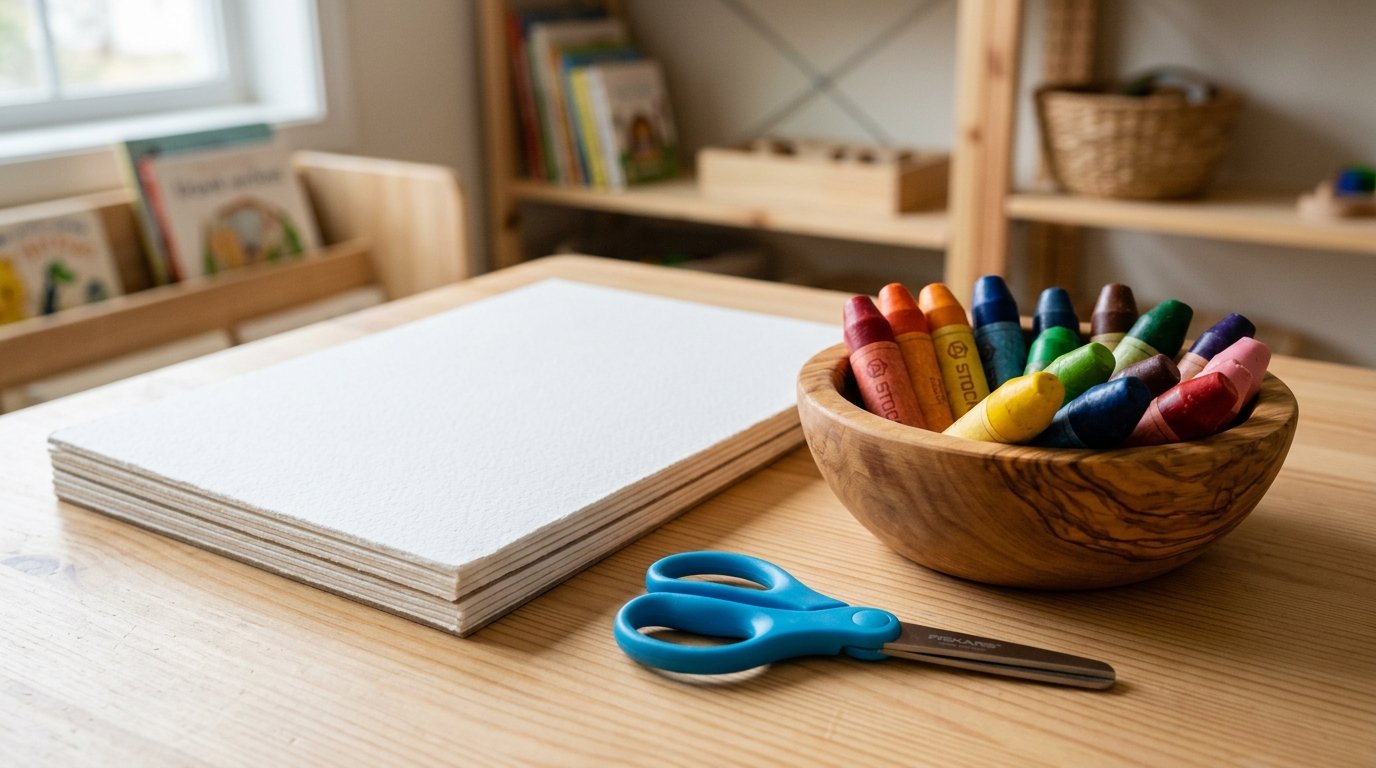
With actual reasons, rather than just ‘no plastic’.
- Battery, light and sound toys. The toy performs and the child spectates. Noise and flashing also interrupt the concentration cycle, which is the thing Montessori is most protective of.
- Do-everything busy boards and activity cubes. Ten skills at once defeats isolation of concept, so nothing gets the repetition needed to master it. This is also the category with the recall problem.
- Fantasy themes for under-sixes. Children in the first plane cannot reliably separate fantasy from reality, so reality-based material is more satisfying to them. This is standard AMI reasoning, not squeamishness.
- Anything with no control of error. If your child has to ask you whether they got it right, the material is doing half its job.
- Licensed characters and single-purpose toys. A pre-scripted character narrows what a child can invent with it.
- Anything bought on the Montessori label alone. See the section above.
- Oversized gifts with no shelf home. If the child cannot fetch it and put it away alone, it undermines the whole point.
- Vintage wooden toys with chipped paint. Lead risk. Sentimental, and not worth it.
The Non-Toy Gifts That Land Best
Borrowed from the most thoughtful guide on this SERP, and true in my experience.
- A real job. A child-sized broom, a watering can, a chopper. Participation is the gift.
- An experience. A zoo membership, a swimming course, a train journey with just one adult.
- A plant of their own to water and be responsible for.
- Money to spend on someone else. For a four- or five-year-old this is a genuinely formative gift.
- A magazine subscription, so something arrives with their name on it every month.
- Nothing at all, and time instead. Going outside is free and outperforms most of this list.
How Many Gifts Is Too Many
Fewer than you think. Keep roughly eight to twelve activities accessible on a shelf and store the rest, rotating on observation rather than on a schedule. Choice overload measurably shortens play.
For a birthday specifically: one thing from the family, and if relatives ask, point them at the under-$25 list or suggest they contribute to one investment gift between them. Five wrapped parcels of equal size produces less play than one good object.
Frequently Asked Questions
What are the best Montessori gifts for a first birthday?
A self-correcting first puzzle such as the PlanToys Shape Matching Puzzle at about $18, or the Geo Shape Sorter Bucket at about $22. At one, the drives are posting, stacking and cause and effect, so one simple object that does one thing well beats anything with more features.
Is a Pikler triangle a Montessori toy?
No. It was designed by Emmi Pikler, a Hungarian paediatrician, and it is Montessori-adjacent rather than Montessori. The two approaches independently agree on freedom of movement, which is why the triangles are popular in Montessori homes. If you buy one, check the rung spacing and the folding lock, for the reasons in the section above.
Are Montessori toys actually worth the money?
Some are. The word itself guarantees nothing, since it is not trademarked or certified. Judge by the four tests: does it do one thing, does the child do the work, is there a control of error, is it real. A five-dollar vegetable chopper passes all four. A forty-dollar Montessori-branded busy board fails three.
What is a good gift for a Montessori teacher?
Consumables and practical things, since classrooms run through them: good art materials, real flowers for the flower-arranging shelf, small glass jugs, or a contribution to a classroom material. Avoid mugs and avoid anything decorative, because classroom shelf space is genuinely scarce.