
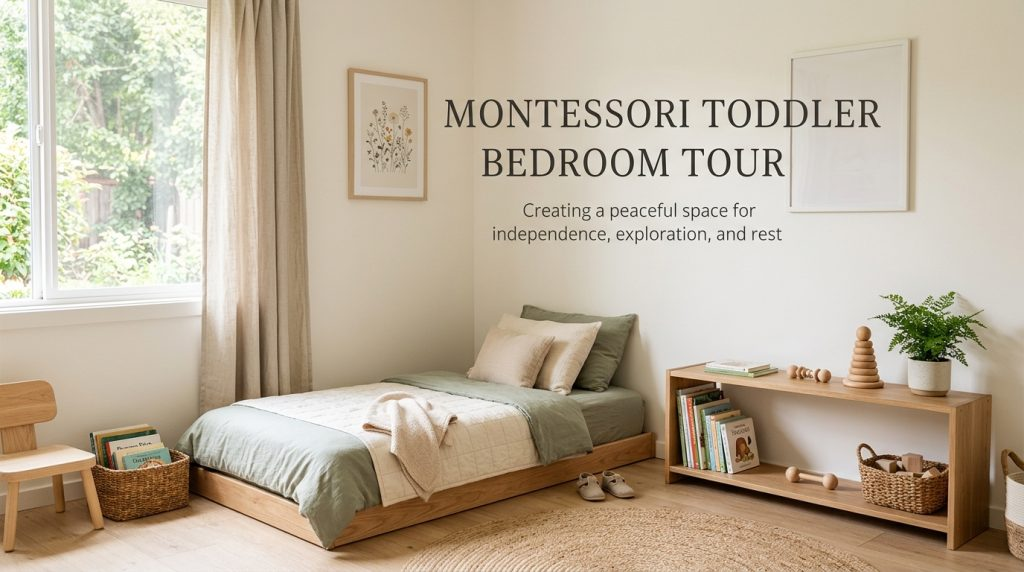
Montessori Toddler Room Ideas That Actually Work
Montessori toddler room ideas can help create a calm, safe, and welcoming space where your child can explore and become more independent. A Montessori-inspired room does not need to be expensive or perfectly designed. The goal is to create an environment where everyday things are easy for toddlers to reach, use, and understand.
Montessori Toddler Room Ideas
The Eight Things the Room Actually Needs
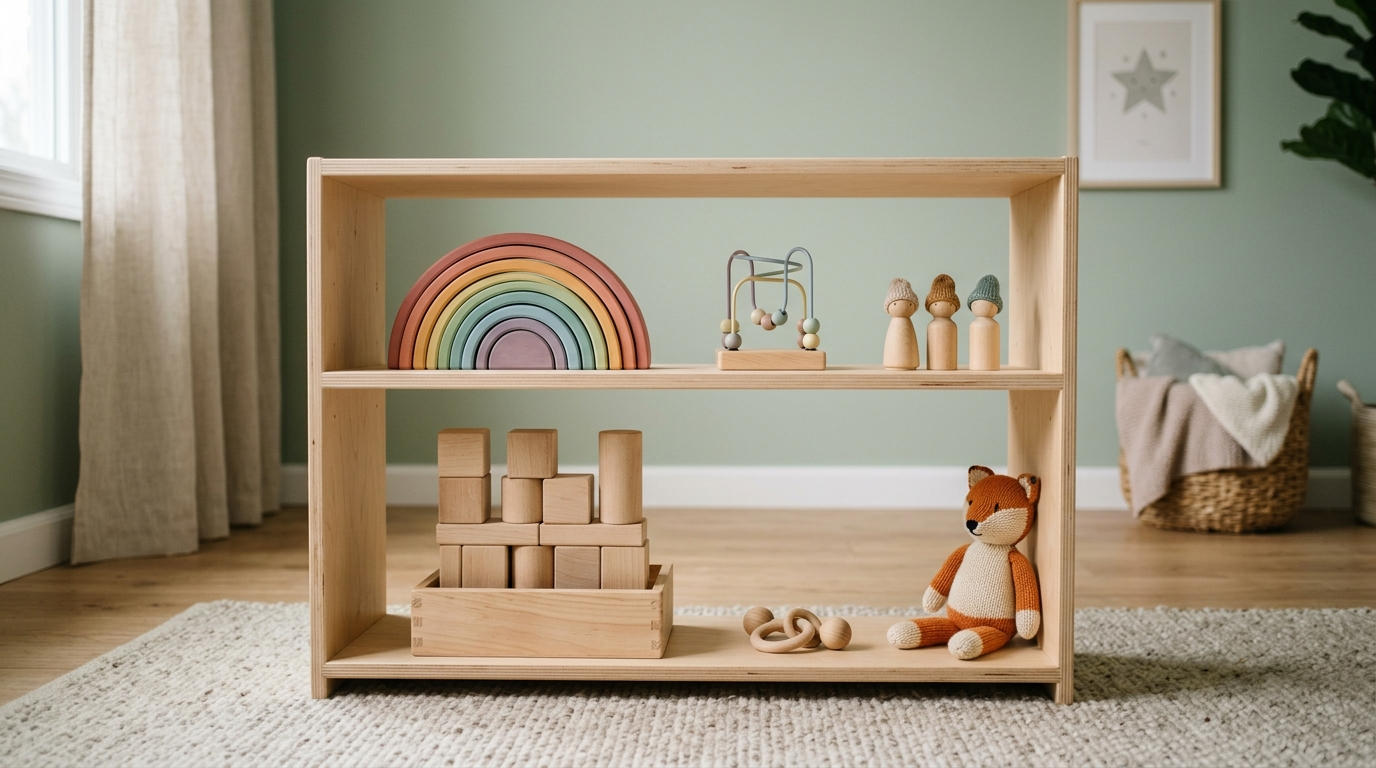
Every credible source on this topic converges on roughly the same list. Everything else is decoration.
- A floor bed, or simply a mattress low to the ground, placed in a corner so two sides are protected.
- One low open shelf, holding a small number of items, bolted to the wall. Not optional. See the shelf section below.
- A forward-facing book display with five or six books, so the covers are visible and the choice is manageable.
- A child-height mirror, ideally in a dressing area. A Command hook or adhesive strips avoid drilling.
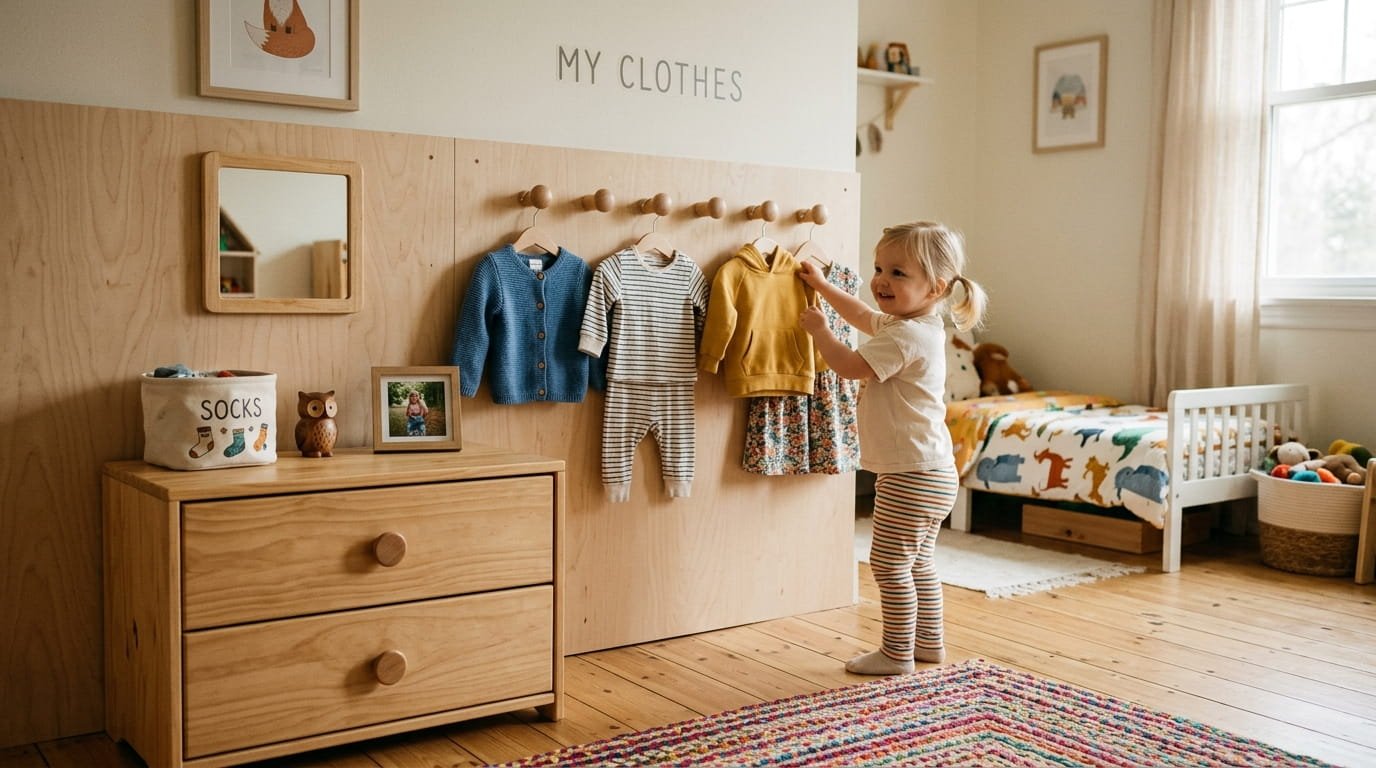
- An accessible wardrobe, meaning a low rail, baskets or bottom drawers with two to four outfit options.
- A soft reading spot: a floor cushion, a rug, or a small chair. It does not need to be a designed nook.
- Art and photographs at your child’s eye level, roughly 60 to 90 centimetres from the floor.
- A childproofed floor and walls: anchored furniture, covered sockets, no blind cords, soft floor covering.
Notice what is not on that list. No toy storage system, no teepee, no wall of shelving, no colour scheme.
Where the Bed Goes, and the Mould Problem Nobody Mentions
Put the mattress in a corner. Two walls give your child a sense of enclosure and remove two edges to roll off. Keep it away from radiators, windows, blind cords and sockets.
Now the thing almost no guide tells you: a mattress placed directly on carpet will eventually grow mould. Air cannot circulate underneath, moisture from your child’s body has nowhere to go, and over months you can ruin both the mattress and the carpet under it. Parents discover this by lifting the mattress and finding black spotting.
Three fixes, in order of how much they cost:
- Lift the mattress off the floor slightly. A low slatted frame with even a couple of inches of clearance solves it completely and is still a floor bed as far as your child is concerned.
- Put a breathable layer underneath. A slatted roll-out base or even sheets of cardboard between rug and mattress, replaced periodically.
- Stand the mattress up against the wall regularly to air both sides. Free, but you have to remember.
When to Move From Cot to Floor Bed
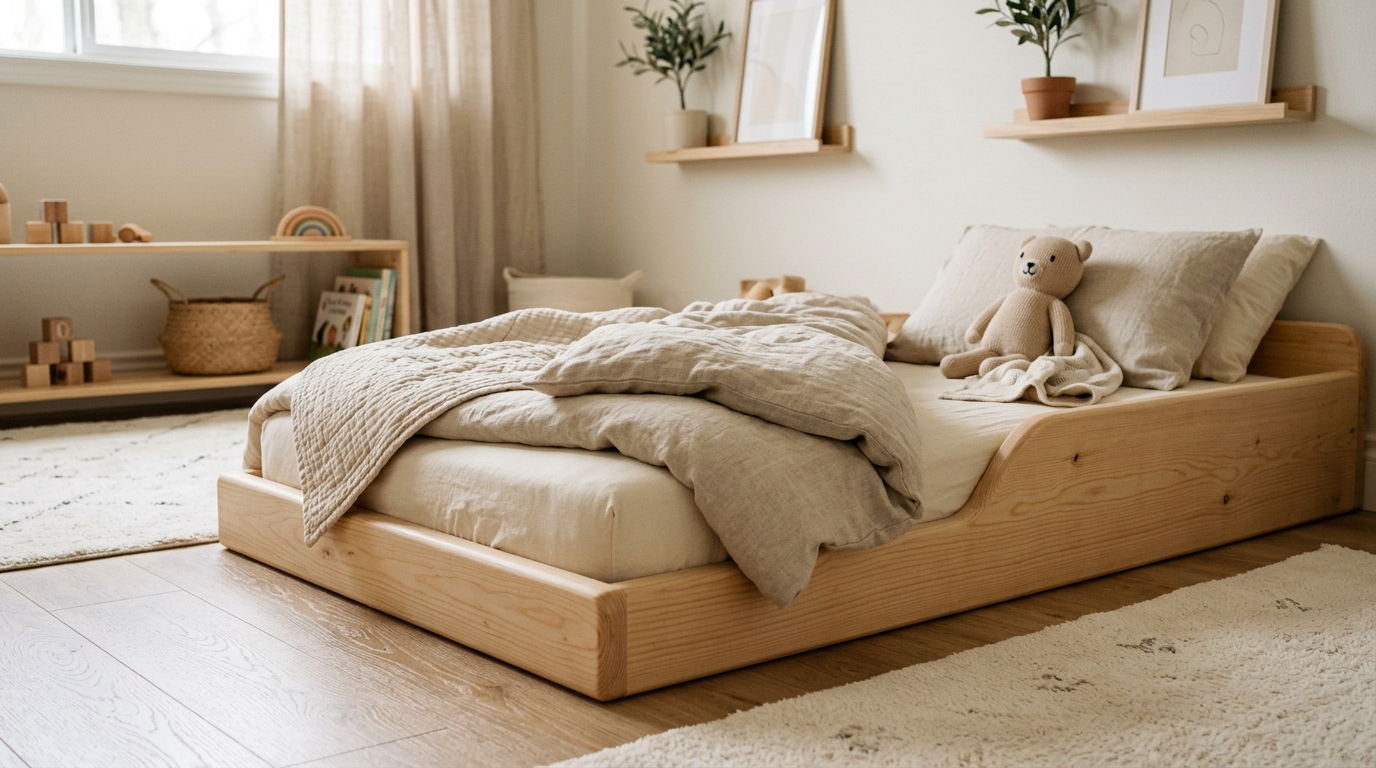
Classic Montessori guidance allows a floor bed from birth, and some families do exactly that successfully. In practice most parents who have tried both land somewhere between 18 and 20 months.
The reason is mobility. A baby who cannot crawl stays where you put them. A newly mobile ten-month-old can leave the bed and roam a dark room, which means the whole room has to be as safe as a cot, at a stage when the child has no judgement at all. By eighteen months a toddler understands staying in bed as a concept, even if they ignore it.
If you are moving from a cot, do it when the room is already fully childproofed and not in the same fortnight as any other big change, so not alongside potty training, a new sibling, or starting nursery.
The Floor Bed Mistake That Raises the Fall Height
Here is a mistake that is easy to make and slightly counterintuitive. Parents buy a thick, high-quality mattress because it seems kinder, and in doing so they raise the fall height back up to something worth worrying about. A ten-inch mattress on the floor is not a low bed.
Choose a thinner mattress, four to six inches, and put a soft foam play mat or a folded blanket along the open side. If you have already bought the thick one, a foam bumper along the exposed edge is a reasonable patch.
The Wardrobe Trick That Makes Getting Dressed Work
This is the single most useful idea I found while researching this, and it solves the eternal conflict between free choice and weather-appropriate clothing.
Hang exactly two tops, and lay two matching bottoms below them. That is it. Your child has a real choice and a real sense of authority, and both options work for today’s weather. You are not negotiating about shorts in November, and you are not choosing their clothes for them.
Add a low rail or use the bottom of an existing wardrobe, toddler-sized hangers, and a basket for dirty clothes at floor level. A light-switch extender is a cheap addition that lets a child manage their own light.
Why Five Books Beats Twenty
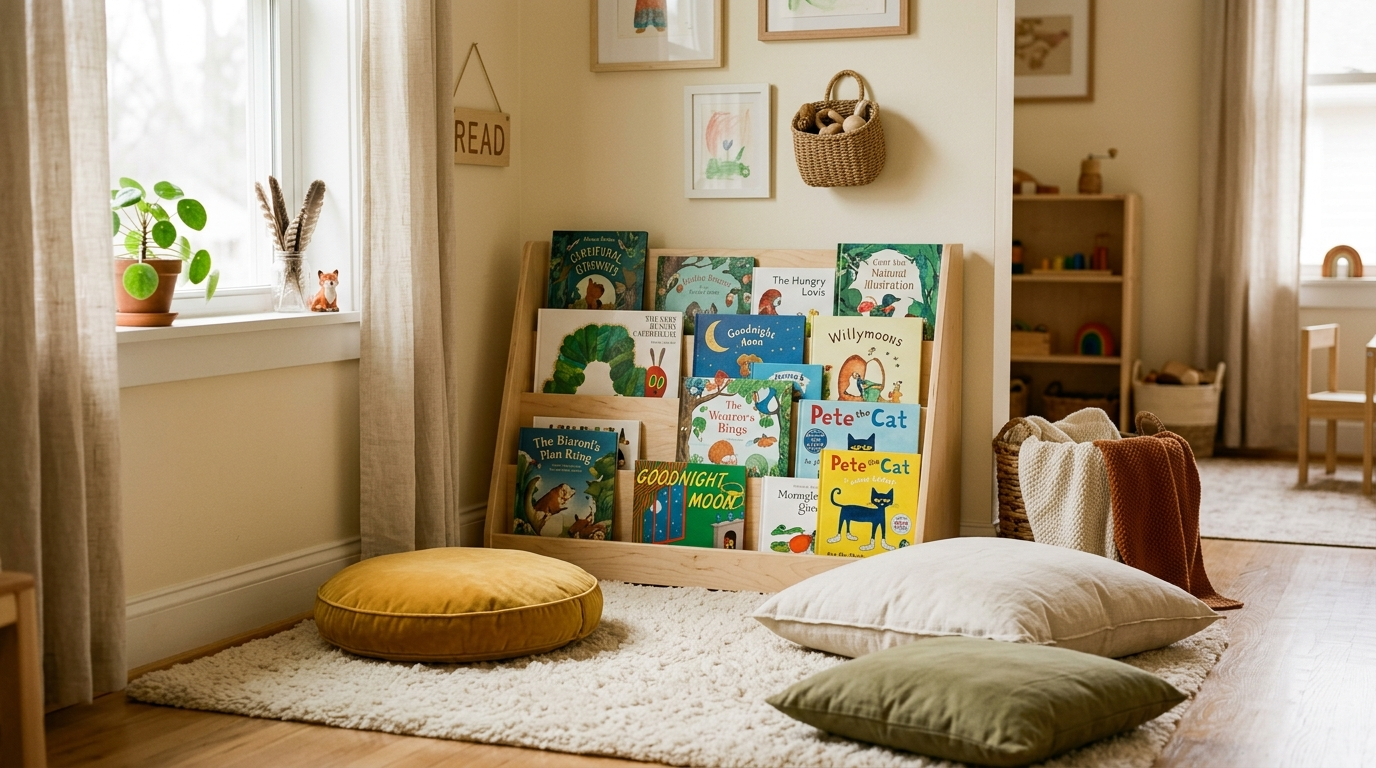
Display five or six books, facing forward, and store the rest out of sight. Rotate them every week or two.
The practical reason is one experienced Montessori parents raise repeatedly: a toddler often insists that every displayed book gets read at bedtime. Twenty visible books is either a forty-minute bedtime or a nightly argument. Five is a choice your child can make and you can honour.
There is a developmental reason too. A child faced with too many options tends to choose none and tip the lot on the floor instead. Fewer books get read more often, and rereading is how fluency builds.
When Your Toddler Destroys Everything on the Low Shelves
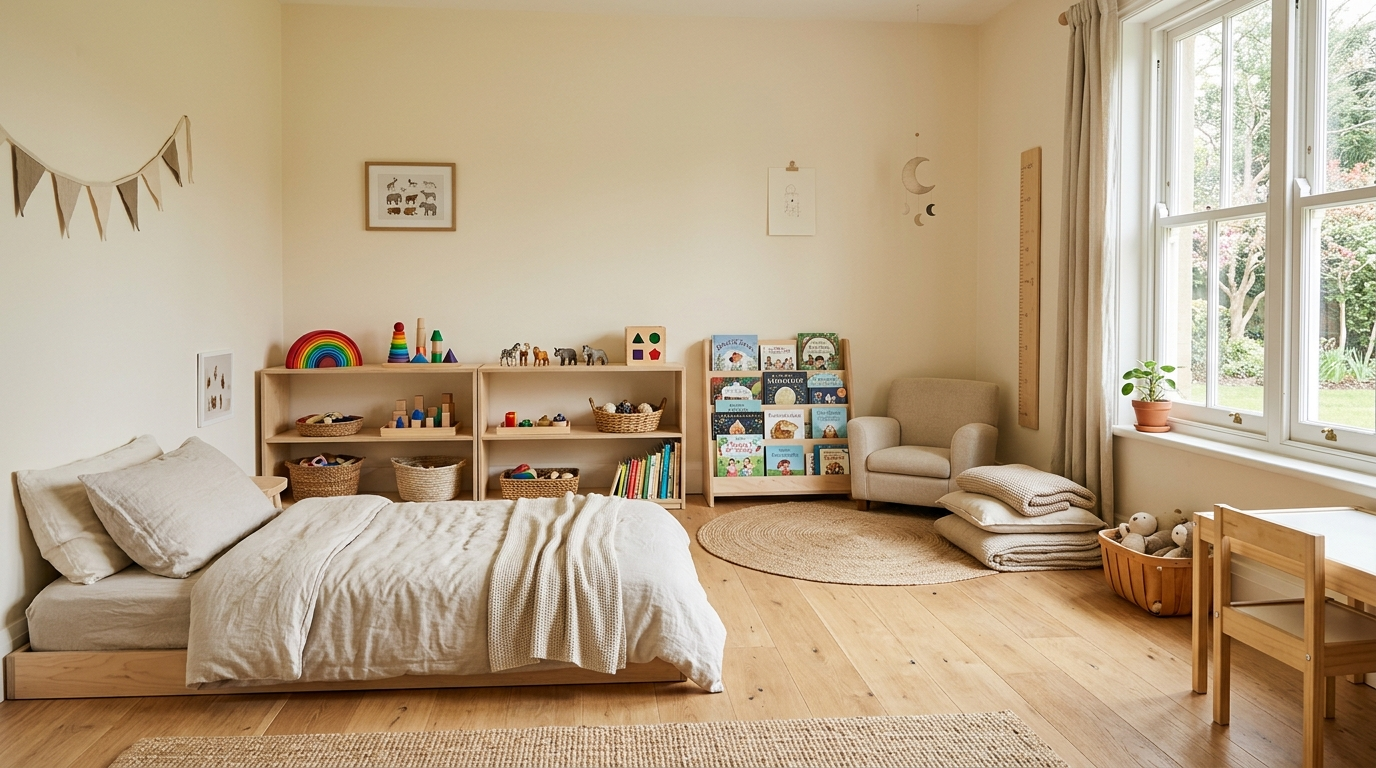
This is the part missing from every beautiful room tour, and if it is happening to you, you are not doing it wrong.
Parents report the same pattern constantly. Everything within reach exists only to be pulled down and thrown. Modelling how to use it makes no difference. Art comes off the walls, books get ripped, the dresser becomes a climbing frame. One mother of twins described stripping the room back to two beds with everything else six feet up, and said the result felt like a prison rather than a Montessori environment.
What actually helps, in the order people find it:
- Bolt everything to the wall and cover the floor in thick foam. Do this first. A climbed shelf that is anchored is a nuisance; an unanchored one is an emergency.
- Reduce drastically. Not to a curated eight items, to two or three. Then rotate.
- Remove books during the ripping and eating phase. Read together, then take the books out of the room. This is temporary and it is not a failure.
- Accept a bare room. A bedroom is a resting place, not a playroom. A room with a bed, a mirror and two hooks is a legitimate Montessori bedroom.
- Wait. This phase is developmental and it passes. Rebuild the shelf in three months rather than fighting for it now.
Temperament decides more than method here. Two children raised identically will treat the same shelf completely differently, and adjusting to the child in front of you is more Montessori than adhering to the photograph.
The Realistic Version: A Sleep and Dress Room Only
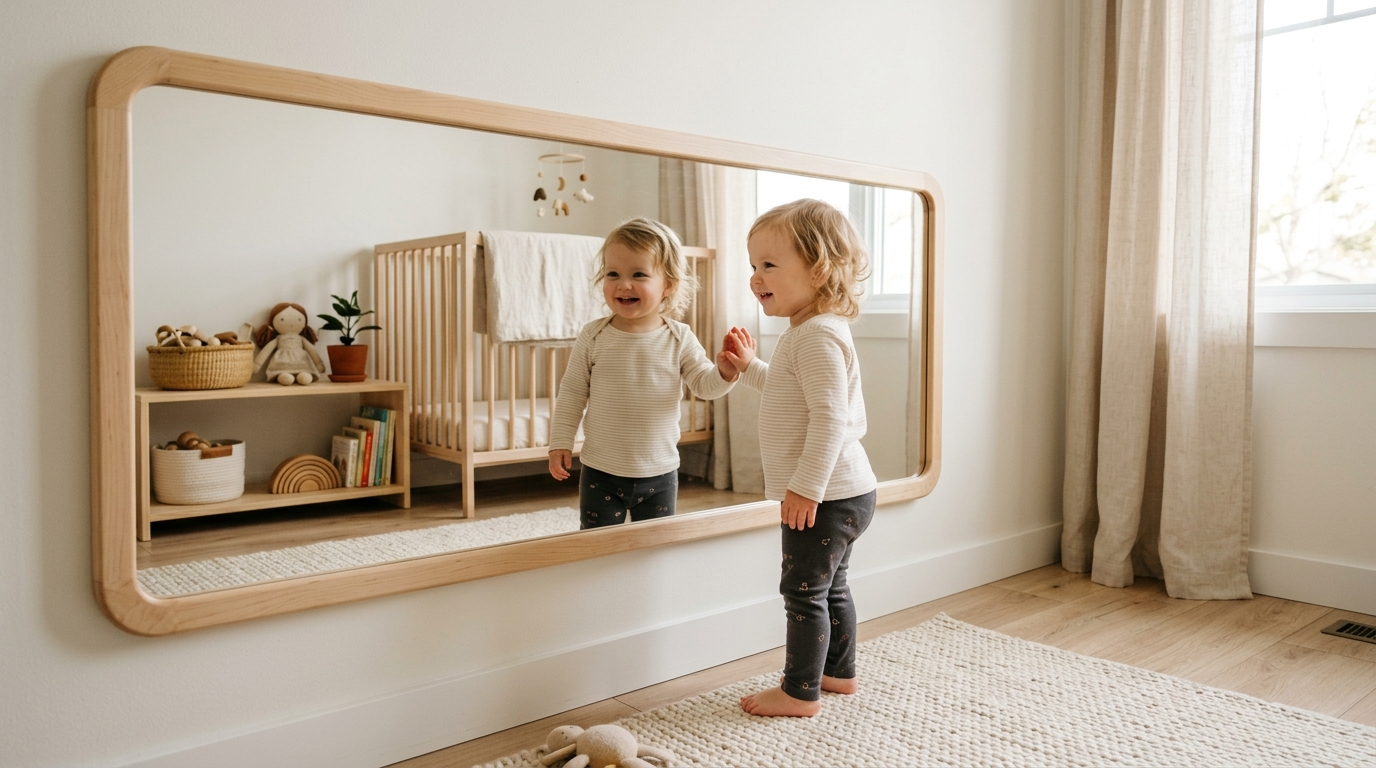
The most useful reframe I came across, and one no page currently ranking for this keyword offers: move the toys out of the bedroom altogether.
Keep the bedroom for sleeping and dressing. Bed, wardrobe, mirror, laundry basket, a couple of family photographs at child height. Put the shelf, the toys, the books and the activity trays in the living room, the hall, or wherever your family actually spends its day.
Three things improve immediately. Sleep gets easier, because the room no longer contains anything more interesting than sleeping. Destruction stops, because there is nothing to destroy. And the materials get used more, because they are now in the room where you are, and a toddler wants to be where you are.
This is not a compromise or a failure to do Montessori properly. Dr Montessori’s principle was to prepare the environment for the child. If the prepared environment means an empty bedroom and a busy living room, that is a correct answer.
Small Rooms and Shared Rooms
For a small room, the eight-item list is already the answer. Skip the reading nook and put a cushion on the bed. Use the wall for the mirror and a rail rather than floor furniture. One shelf, not three.
For siblings sharing, the problem parents actually hit is not space. It is that the younger child wakes, gets out of bed, and climbs into the older child’s bed, which wakes and frightens the older one. Two things help. Stagger bedtimes so one child is properly asleep before the other comes in. And place the beds so they are not adjacent, ideally on different walls, so a wandering toddler has further to go.
Blankets are the other shared-room puzzle, once children outgrow sleep sacks and you have two toddlers who cannot reliably cover themselves. A wearable blanket in a larger size buys you another year.
What to Leave Out
- A night light. Consider full darkness instead, with a real working torch your child controls beside the bed. It gives them agency over light rather than making them dependent on a fixture.
- A top sheet. A toddler cannot make a bed with one. A duvet they can pull up means they can genuinely make their own bed.
- A toy box. Things go in and are never seen again. Open shelves or nothing.
- A colour scheme you love and they do not. One competitor asked her toddler what he wanted and built the room around his answer. That is more Montessori than a beige room.
- A cot bumper, canopy, or anything above the bed. Nothing hangs over a floor bed.
Safety Non-Negotiables
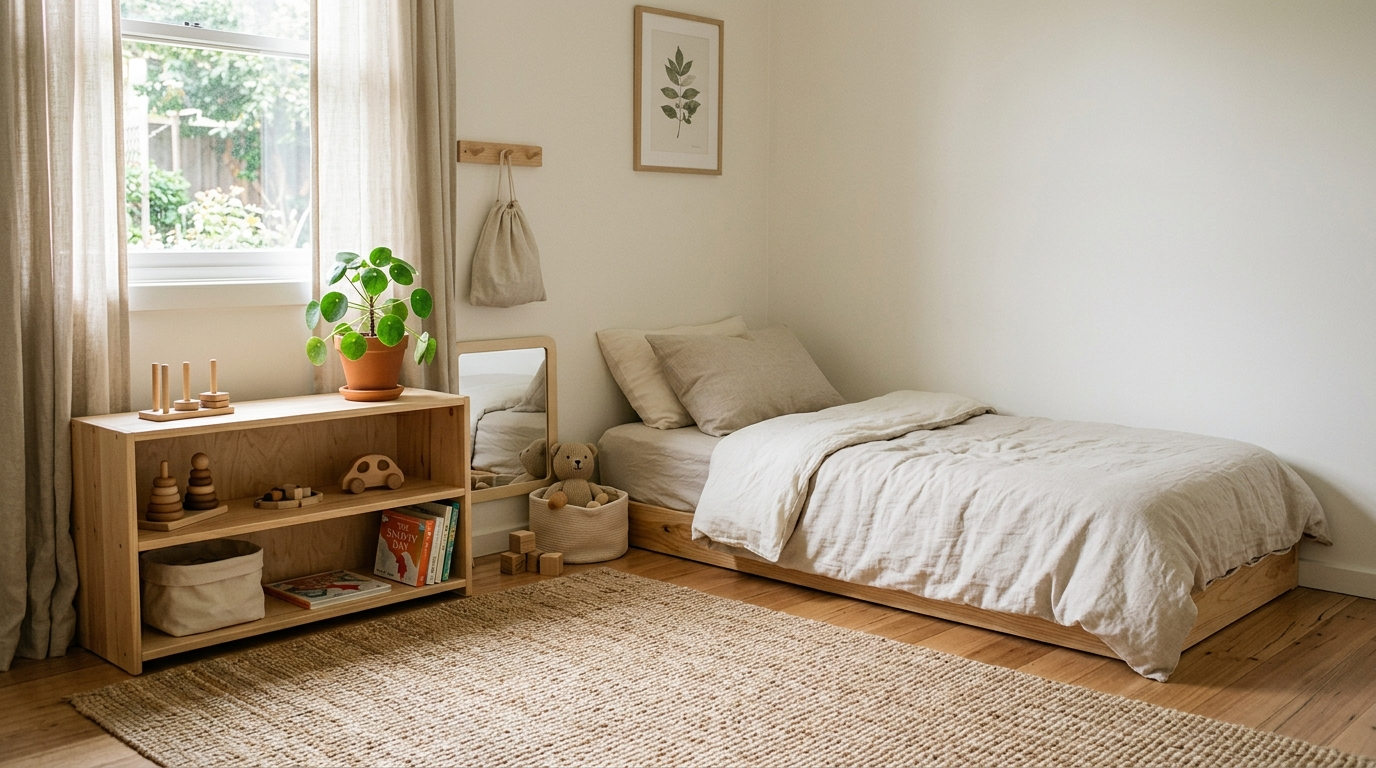
A floor bed means your child can leave the bed unsupervised in the dark. The whole room has to be as safe as a cot was.
- Anchor every piece of furniture to the wall, including shelves that look too low to matter. Assume everything will be climbed.
- Cover all sockets and remove or shorten every cord, including blind cords and monitor cables.
- Soft flooring across the whole floor, not just beside the bed.
- A safety gate on the doorway, or a door handle cover, so a night-waking toddler stays in a room you have made safe rather than reaching the stairs.
- Nothing heavy or hard within reach of the bed, and nothing on the wall directly above it.
- Check the mattress underside monthly for damp, for the reason described earlier.
Frequently Asked Questions
What is the recommended layout for a Montessori toddler bedroom?
Bed in a corner with two protected sides. One low shelf against a different wall, anchored. Mirror and wardrobe together as a dressing area. Books forward-facing and reachable. Floor deliberately left clear, because floor space is where a toddler plays. Everything a child needs at their height, nothing they must ask for.
Is 2 years old too early for Montessori?
No, two is a natural age for a Montessori bedroom. Most families move to a floor bed between 18 and 20 months, and a two-year-old can manage their own light, choose between two outfits and put clothes in a basket. If anything, two is when this setup starts to pay off.
What does a realistic Montessori toddler bedroom look like?
Usually much barer than the photographs. Often a bed, a mirror, a wardrobe and almost nothing else, with the toys and books living elsewhere in the house. Many parents arrive at that version after the shelf gets destroyed a few times, and it works better than the version in the photographs.
What should a 3 year old’s room look like?
The same eight elements, adjusted upward. Raise the shelf and the wardrobe rail, increase the book display to eight or ten, add real jobs like a small laundry basket they empty, and expect them to make the bed themselves. Reassess heights every few months, because outgrown furniture is the usual reason a setup stops being used.
Do I need to buy a special Montessori bed?
No. A mattress on a low slatted base is a floor bed. House-frame beds are lovely and entirely optional. Spend the money on making the room safe before spending it on the frame, and keep the mattress on the thinner side.
My toddler will not stay in the floor bed. What now?
Expect this for the first few weeks. Make the room safe enough that it does not matter if they get up, walk them back without conversation each time, and keep the room boring, which is a strong argument for moving the toys out. Most children settle within two to three weeks.