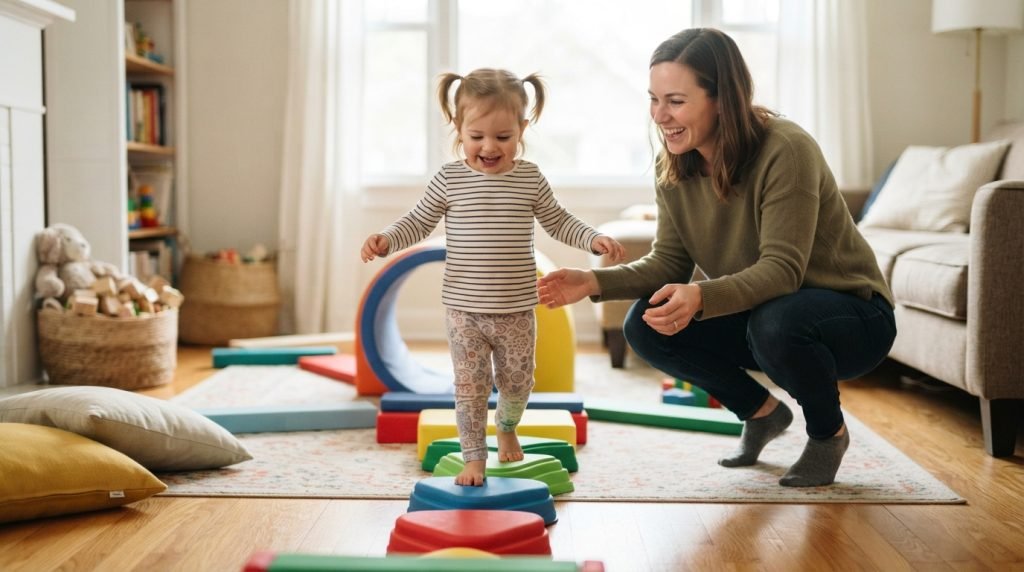
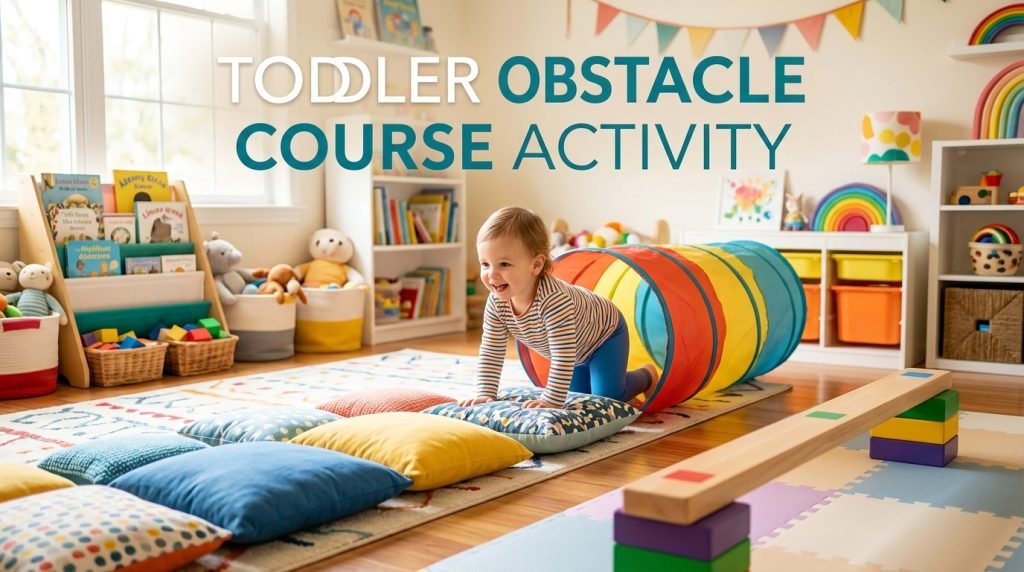
Obstacle courses are one of the best ways to keep toddlers active while helping them learn important physical skills. The best part? You don’t need expensive equipment. With a few household items, you can create an exciting obstacle course that encourages movement, problem-solving, and lots of laughter.
Why Obstacles Courses are Great for Toddlers?
Obstacle courses help toddlers develop:
- Balance and coordination
- Gross motor skills
- Confidence
- Listening skills
- Problem-solving abilities
- Physical strength
- Focus and concentration
They also provide a fun way to burn off energy, especially on rainy day.
Easy Indoor Obstacle Course Ideas
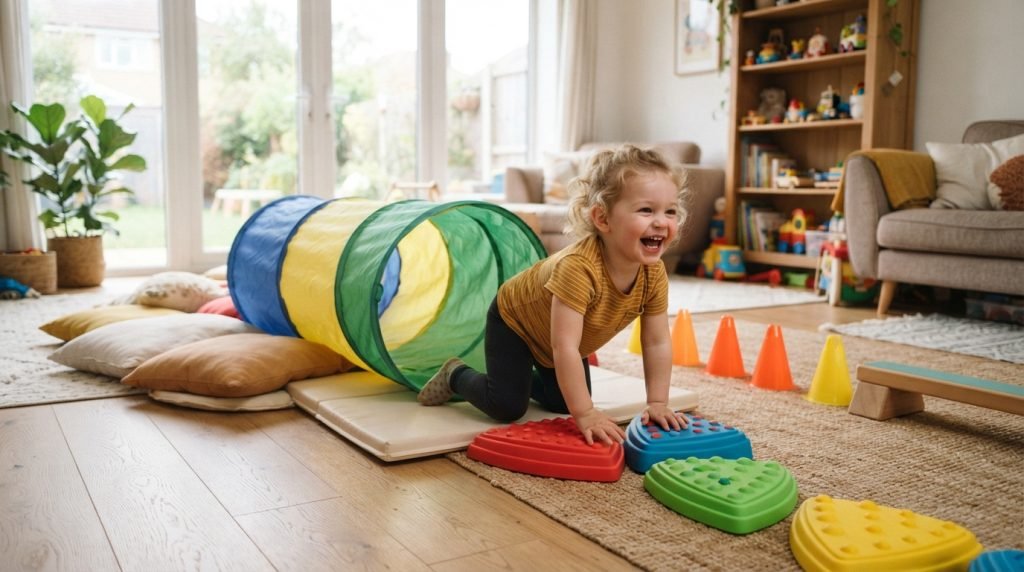
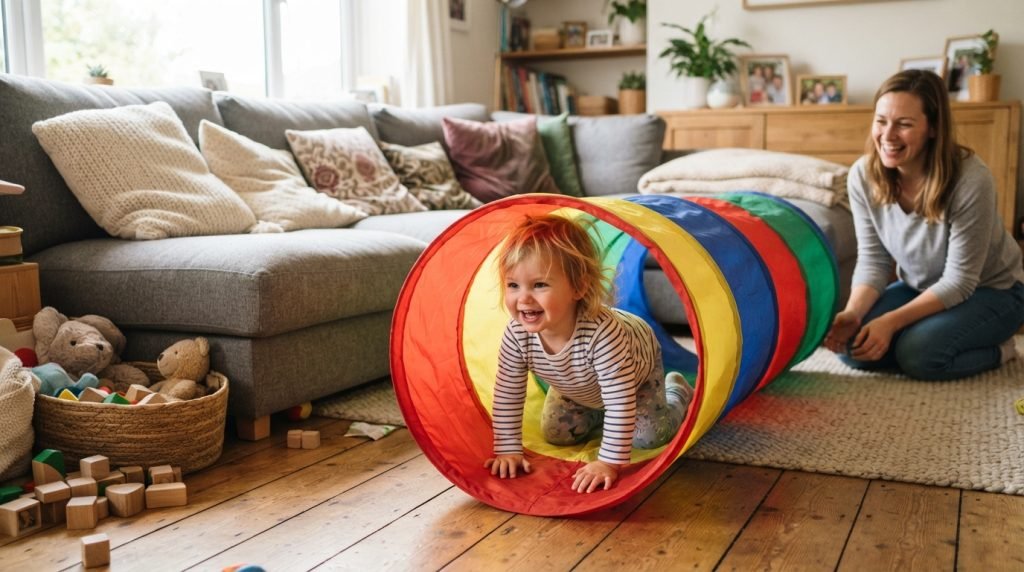
Crawl Under
Use a play tunnel or place a blanket over chairs to make a tunnel.
Jump Over
Arrange pillows on the floor for safe jumping.
Balance Walk
Place painter’s tape on the floor and ask your toddler to walk along the line.
Toss and Aim
Throw soft balls into a basket before moving to the next station.
Finish with a Dance
Play music and let your child dance for 20 seconds before completing the course.
Outdoor Obstacle Course Ideas
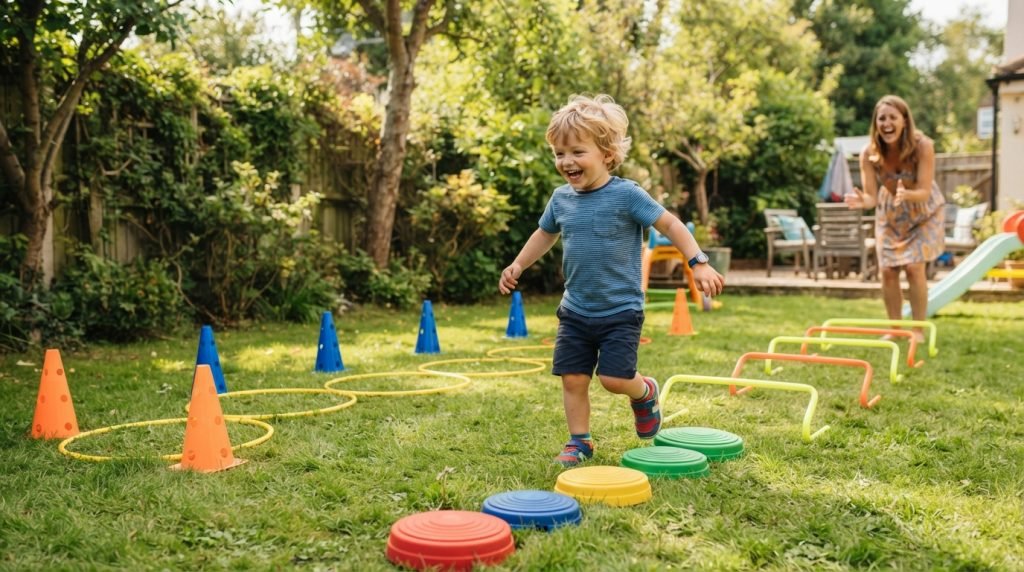
Outdoor obstacle courses can include:
- Running around cones
- Jumping inside hula hoops
- Walking on stepping stones
- Kicking a ball into a goal
- Crawling under a rope
- Racing to the finish line
Fresh air makes the activity even more exciting.
Materials You’ll Need
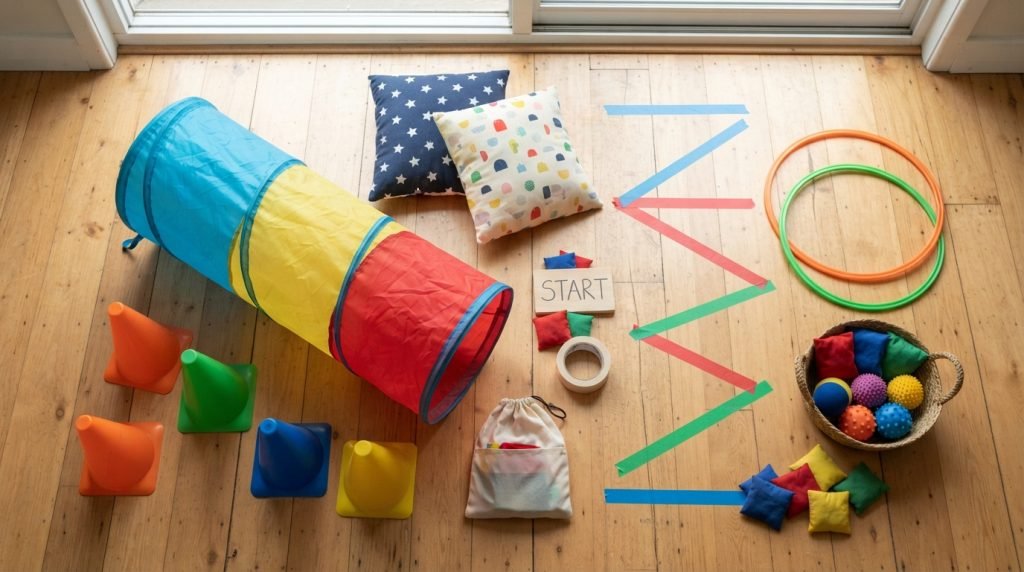
You can use:
- Pillows
- Blankets
- Chairs
- Painter’s tape
- Cones
- Hula hoops
- Play tunnel
- Soft balls
- Bean bags
- Laundry basket
Most families already have many of these items at home.
Make it More Fun
Try changing the obstacle course every week by adding new challenges.
Ideas include:
- Pretend to be different animals
- Carry a stuffed toy to the finish
- Collect colored blocks along the way
- Count each obstacle out loud
- Add music for extra excitement
Changing the course keeps toddlers interested and eager to play.
Skills Your Toddler Learn
Obstacle courses help children practice:
- Gross motor development
- Balance
- Coordination
- Spatial awareness
- Following directions
- Confidence
- Problem-solving
- Independent play
These skills support healthy growth through active play.